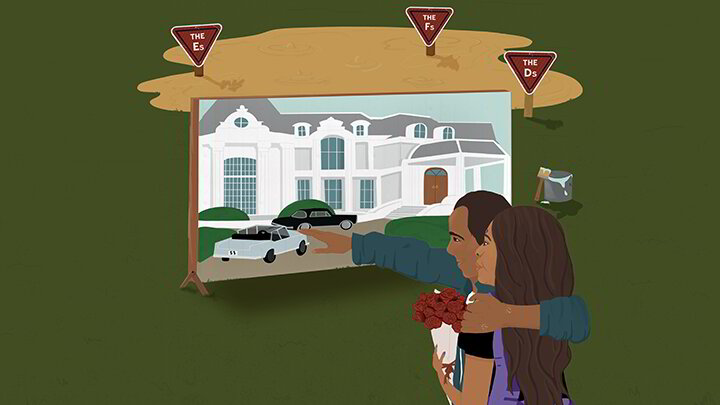
In the intricate dance of power dynamics, whether in personal relationships or the political arena, the patterns of coercive control often lurk beneath the surface of the quicksand, invisible to the untrained eye. Today, we delve into a pressing issue that exemplifies how the tactics of coercive controllers can manifest in the highest echelons of government: the recent continuing resolution situation. By examining this through the lens of The Quicksand Model®, we aim to shed light on the parallels between coercive control within domestic abuse and political abuses of power, revealing the insidious nature of how coercive control functions in our society.

The Quicksand Model®: A Framework for Understanding Coercive Control

The Quicksand Model® of Coercive Control is a comprehensive educational tool designed to make the often invisible patterns of coercive control visible. It synthesizes 70 years of research and theory across various fields, including domestic abuse, human trafficking, cults, and extremism, to educate professionals on detecting and preventing coercive control. This model is particularly effective in overcoming professional and societal biases that hinder the protection of victims and the accountability of coercive controllers.

In the context of political power dynamics, The Quicksand Model® can be applied to understand how coercive control tactics are used by political entities to deceive, manipulate, and maintain power. The model's focus on making invisible coercive control tactics and strategies visible is crucial in political settings where abuses of power are often exerted through subtle and manipulative means. 

The Double Bind of the Continuing Resolution

The recent continuing resolution (CR) situation in U.S. politics provides a stark example of how coercive control tactics can be employed on a grand scale. The House Appropriations Committee released the Full-Year Continuing Appropriations and Extensions Act, 2025, on March 8, 2025, setting in motion a series of events that would culminate in a classic double bind scenario. 

The Setup (aka The Double Cross): Creating a No-Win Situation (aka The Double Bind)

The Republican-led House pushed the continuing resolution as a straightforward solution to avoid a government shutdown, emphasizing defense spending increases and maintaining essential services without raising taxes. However, this framing created a double bind for Democrats and the public:

The impossible choice, or as Janja Lalich might call it, the "bounded choice," and what Rep. Alexandria Ocasio-Cortez called a "false choice", presented to democrats was:

- Support the bill and accept its provisions, potentially allowing for misuse of funds, continued constitutional violations, and cuts to non-defense spending.

- Oppose the bill and risk being blamed for a government shutdown, which could have severe consequences for millions of Americans. 

This situation mirrors the tactics used by coercive controllers in relationships, where victims are often presented with choices that have negative outcomes regardless of their decision. The Quicksand Model® helps us recognize this pattern, showing how political entities can entrap people in the quicksand of coercive control similar to in abusive relationships.

Double Speak: The Language of Manipulation

Double speak, the weaponization of language and communication that deliberately obscures, disguises, distorts, or reverses the meaning of words, and is a common tool used by coercive controllers in relationships and politics. 

In the context of the continuing resolution, we see this tactic employed through:

- Framing the CR as a "clean funding extension": This language obscures the potential consequences of the bill's provisions and the lack of input from opposition parties.

- Emphasizing "government functionality" over specific funding directives: This rhetoric masks the potential for misuse of funds and the sidelining of important social programs.

The use of double speak in this situation aligns with the patterns identified in The Quicksand Model®, where coercive controllers use language to confuse, disorient, and control their targeted victims. By recognizing these linguistic patterns and signs of coercive control, we can better understand and resist coercive control in both personal and political contexts.

DARVO: As a Political Strategy

DARVO (Deny, Attack, Reverse Victim and Offender) is a manipulative strategy often used by coercive controllers to avoid taking responsibility for their actions. In the political arena, we see this strategy employed in the following ways:

- Deny: Republican leadership denied any wrongdoing in the process of crafting the CR, despite concerns about lack of bipartisan input.

- Attack: Critics of the bill were attacked and accused of being willing to shut down the government, shifting focus away from the bill's contents.

- Reverse Victim and Offender: By framing Democrats as obstructionists, the Republican leadership positioned themselves as victims of unreasonable opposition, rather than acknowledging the legitimate concerns raised.

This use of DARVO in political contexts mirrors its application in abusive relationships, where it serves to manipulate perceptions and maintain control. The Quicksand Model® helps us identify these strategies and tactics, empowering us to challenge such coercively controlling behaviors effectively.

Breaking Free from the Quicksand

Understanding the parallels between coercive control in relationships and political manipulation is crucial for fostering a healthier democracy. The Quicksand Model® provides a framework for recognizing these patterns and developing strategies to counter them. By educating ourselves and others about these tactics of coercive control, we can work towards systemic change that promotes transparency, accountability, and genuine collaboration in our political processes.

As we navigate the complex landscape of modern politics, let us remain vigilant against the subtle forms of coercive control that can erode our democratic institutions. By shining a light on these tactics, we take the first step towards breaking free from the quicksand of coercive control and building a more equitable and just society.

Remember, recognizing these patterns is not about partisan politics, but about understanding and challenging the abuse of power wherever it occurs. By applying the insights from The Quicksand Model® to our analysis of political events, we can foster a more informed and resilient citizenry, capable of holding our leaders accountable and promoting genuine democratic dialogue.

In the face of coercive control, whether in personal relationships or the political sphere, knowledge and awareness are our most powerful tools. Let us use them wisely to create a world where coercion and control have no place, and where true democracy can flourish.

Introduction to The Quicksand Model of Coercive Control

The Quicksand Model of Coercive Control, developed by (me) Kate Amber and utilized by End Coercive Control USA, is a survivor-centered, trauma-informed framework that explains the layered tactics and strategies coercive controllers use to entrap and dominate their targeted victims. This model categorizes coercive control tactics and strategies into the D's, E's, F's, and I's, offering a detailed understanding of how coercive control operates on psychological, biological, and social levels. It is a bio-psycho-social framework that takes a holistic and systems-based approach to explaining abuse, violence and oppression. By exploring these categories, we can better understand the mechanisms of coercive control and learn to dismantle the systems that enable coercive controllers and harm targeted victims.

The D's: The Weapons of Coercive Control: Double Standards, Double Binds, Double Speak, Double Down, Double Team, Double Cross, and DARVO

The "D's" in the Quicksand Model highlight the manipulative tactics and strategies abusers use to confuse, control, and dominate their targets.

Double Standards: Coercive controllers enforce one set of rules for themselves and another for their targets, creating an unfair and oppressive dynamic. For example, they may demand loyalty while being unfaithful themselves.

Double Binds: Targets are placed in no-win situations where any choice they make is wrong. This tactic creates confusion and helplessness, as the target feels they cannot succeed no matter what they do.

Double Speak: Coercive controllers use contradictory and deceptive language and communication to manipulate and gaslight their targeted victims. This tactic erodes trust in the target's own perceptions and reality.

Double Down: When confronted, coercive controllers intensify their controlling behavior rather than taking accountability. This escalation reinforces their dominance and silences the target of their abuse.

Double Team: Coercive controllers may enlist others to support their narrative or isolate the victim further, creating a sense of betrayal and amplifying the target's isolation.

Double Cross: Coercive controllers betray the trust of their targets, often by breaking promises or exploiting vulnerabilities. This tactic deepens the targeted victim's dependency and sense of betrayal.

DARVO (Deny, Attack, Reverse Victim and Offender): While The Doubles represent tactics of coercive control, DARVO is the coercive controller's most common strategy. DARVO is used by coercive controllers to Deny their actions, Attack the target for speaking out, and position themselves as the true victim (Reverse Victim & Offender). This strategy shifts blame and silences the targeted victim. 

The D's illustrate how coercive controllers entrap targets in quicksand using manipulation, deception, and tactics and strategies of coercion and control, leaving targets feeling trapped and powerless.

The E's: The Goals of Coercive Control: Ensnare, Entrap, Exploit, Erode, Prevent Escape Through Escalation, Erase, and Eradicate

The "E's" focus on the ways coercive controllers systematically dismantle a target's autonomy and sense of self. The E's are the coercive controllers goals which keep targets entrapped in quicksand, or return them to the quicksand, if they manage to temporarily escape.

Ensnare: Coercive controllers lure targets into the quicksand with love bombing (manipulative kindness), mirroring, and future faking (which make up the mirage), only to entrap them in the quicksand of coercion and control that is hidden behind the mirage in the background (see image above).

Entrap: Targets are systematically entrapped in quicksand through isolation, financial control, legal manipulation, and various other psychological, biological and social tactics, making it difficult for them to leave.

Exploit: Coercive controllers take advantage of the target's normal human vulnerabilities, such as by violating or ignoring their emotional needs, forcing financial instability, or triggering their past trauma, to maintain control. Some coercive controllers intentionally choose strong, creative and highly capable targets, specifically to exploit the target's strengths, and feed off of them like a parasite.

Erode: Coercive controllers erode the target's sense of self, identity, and autonomy through constant criticism, gaslighting, and manipulation. Over time, targets may lose confidence in their ability to make decisions or live independently.

Prevent Escape Through Escalation: When targets attempt to leave or assert independence,  coercive controllers escalate their tactics and strategies. They do so by increasing the frequency and/or severity of their threats, violence, deception, or manipulation, to prevent their target's escape from the quicksand.

Erase: Coercive controllers attempt to erase the target's individuality, autonomy, and connections to others, leaving them entirely dependent on the abuser. Even after the target leaves the coercive controller, they often feel erased through the coercive controller's and/or system professional's silencing and invalidation of their experience.

Eradicate: In extreme cases, coercive controllers seek to completely eradicate their target. These are the cases that end in homicide, suicide, or homicide/suicide.

The E's demonstrate how coercive control systematically dismantles a target's autonomy and identity, leaving them feeling trapped and hopeless.

The F's: The Methods of Coercive Control: Force, Fraud, and Fear

The "F's" highlight the core mechanisms coercive controllers use to establish and maintain control over their targeted victims.

Force: Coercive controllers use physical, emotional, and/or psychological force to dominate their victims. This can include physical violence, threats, or coercion. Force can be blatant or subtle, and it often manifests as harsh punishments for non-compliance with the coercive controller's demands.

Fraud: Coercive controllers deceive their targets through lies, manipulation, or false promises, creating a false sense of security or trust. Once the target discovers that their coercive controller has been hiding things and lying to them, it can cause intense feelings of betrayal, known as betrayal trauma

Fear: Fear is a central tool of coercive control. Coercive controllers use credible threats, intimidation, and overt and implied consequences to keep targets compliant. Even one single act of physical violence can be enough to instill a deep feeling of fear in the target, leading to increased compliance, and autonomy erosion, over time.

The F's reveal the fundamental tools of coercive control, which rely on deception, intimidation, and violence to maintain dominance.

The I's: Coercive Control in The Law: Indignity, Isolation, Intimidation, Inequality, and Indoctrination

The "I's" focus on the ways abusers strip targeted victims of their dignity, independence, and agency. Indignity, isolation, intimidation and inequality are aspects covered by statutes against coercive control, and although indoctrination is not included in legal statutes, it is often a primary strategy utilized within a pattern of coercive control, especially within groups.

Indignity: Coercive controllers degrade and dehumanize their targets, stripping them of their dignity and self-worth. This can include verbal abuse, humiliation, or treating the target as inferior.

Isolation: Coercive controllers cut targets off from friends, family, and other support systems, leaving them unsupported and socially and emotionally dependent on the abuser.

Intimidation: Coercive controllers use threats, controlling body language, or tone of voice to instill fear and reinforce their dominance.

Inequality: At the heart of coercive control is a profound imbalance of power. Coercive controllers create a dynamic where they hold all authority, while the target is rendered powerless.

Indoctrination: Indoctrination is the overall strategy used by coercive controllers to systematically instill their beliefs, expectations, and rules into the target's mind through repetition and manipulation. This strategy creates a sense of inevitability and compliance, making it even harder for targets to free themselves from the quicksand.

The I's underscore how coercive control operates on multiple levels to dismantle the target's independence and reinforce systemic power imbalances. 

Conclusion

The Quicksand Model of Coercive Control provides a powerful framework for understanding the tactics, strategies, and impacts of coercive control. By examining the D's, E's, F's, and I's we can better recognize the tactics and strategies of coercive controllers and take steps to protect ourselves and our loved ones from this insidious pattern of oppression and domination.

NOTE: Leaving a coercive controller can be very dangerous, so it's important to seek help before doing so. Numerous resources are available on ECCUSA's resource page to assist you.

Follow Us on Social Media
Privacy Policy - Terms and Conditions | End Coercive Control USA © 2025 / All Right Reserved.