
TRANSFORMING SYSTEMS BY MAKING COERCIVE CONTROL VISIBLE
Questions & Answers
End Coercive Control USA Transforms Systems
Below are answers to some of the most commonly asked questions. If your question is not listed, we invite you to contact us directly.
2023-2026 / Member of
The American Bar Association
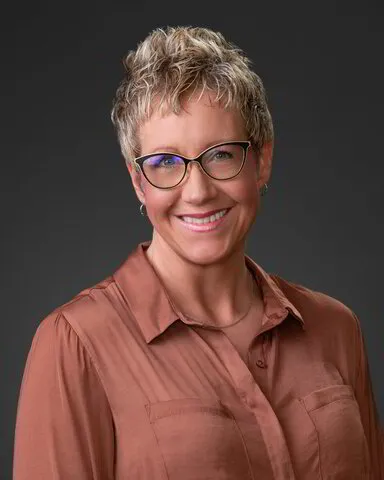
I am a domestic violence, domestic abuse and coercive control expert with a Master of Science in the Psychology of Coercive Control from the University of Salford, the only university in the world that offers a master’s program in coercive control. Below, I have compiled questions that I believe provide answers to the questions you may have about our organization and coercive control.
What is coercive control, and how does it differ from other forms of abuse?
Coercive control is a pattern of behavior used to entrap a person or person in domination and oppression.
What sets coercive control apart is that it’s not just about a single act of abuse or violence; instead, it involves multiple, overlapping tactics, often psychological, emotional, financial, legal, and social, that are strategically weaponized to reduce a person’s freedom and autonomy. Recognizing this instrumental pattern is key to truly understanding coercive control.
A major issue with how our current systems address domestic abuse is the tendency to focus on isolated violent incidents, rather than the broader context in which these incidents occur. This “violent incident model” misses the bigger picture. Abuse is rarely a one-off event, but rather part of a sustained campaign of control and manipulation. Without considering the full context, it’s easy to overlook the ongoing harm and the cumulative impact of coercive control.
The Quicksand Model® and related trainings highlight the reality that coercive control operates like a form of strategic ongoing entrapment. Sometimes described as “terroristic,” or “slave-like,” coercive control can be experienced as similar to quicksand. The harder you try to escape, the deeper and faster you sink!
Coercive controllers employ numerous weapons of coercive control to shift responsibility for the harm they cause onto their targeted victims. They often do this by decontextualizing their actions to create a false equivalency between their abusive actions and the resistive and defensive responses by their targeted victims.
ECCUSA’s goal is to reverse this by placing the blame for harm on the person responsible… the coercive controller.
While traditional views of abuse usually focus on physical injuries, coercive control is much broader and more complex. Prior to escalating to physical violence, as coercive control often does if left unaddressed, the harm it causes can seem invisible because it’s designed to fly under the radar, leaving few, if any, physical marks. This doesn’t mean physical harm isn’t happening. Often, it is, but, the physical and psychological effects are frequently misinterpreted, minimized or overlooked, which adds to the confusion, distress, and trauma experienced by those targeted.
Coercive control isn’t limited to intimate relationships; it can show up in families, workplaces, organizations, and even within entire systems. The Quicksand Model®, developed by Kate Amber, MSc, brings together decades of research to help expose and contextualize these patterns, making it possible to intervene and prevent further harm.
How do I know if coercive control may be affecting me, my organization, or my workplace or someone I care about?
To determine if coercive control is present in your relationship, family, company, system etc., look to see if anyone is using the weapons of coercive control. The D’s, F’s and I’s in The Quicksand Model® can be red flags for coercive control within any context.
The D’s include double standards, double binds, double speak, double team, double cross, double down, double vision and DARVO. The I’s include isolation, intimidation, indoctrination, indignity, inequality and injustice, and the F’s are force, fraud and fear.
If someone you know is using these weapons against you or someone else, whether in a family, business, church, or elsewhere, coercive control is likely operating.
For additional information on the weapons of coercive control in The Quicksand Model®, check out these ECCUSA blogs.
- Targeted & Entrapped: Understanding the Quicksand Model® of Coercive Control
- DARVO & Coercive Control
- Sinking in the Quicksand of Coercive Control: How Force, Fraud & Rear Erode America’s Democratic Foundations
Who is coercive control consulting for?
Coercive control consulting is for:
- Individuals: Survivors, targets, or those questioning their experiences… especially when navigating cases within the civil, criminal or family courts.
- Professionals: Attorneys, therapists, court personnel, HR, and advocates supporting clients or cases involving abuse and/or violence.
- Organizations: Schools, businesses, non-profits, religious groups, and government agencies seeking to detect, prevent, or address coercive control or workplace violence and abuse within their structures
- Systems: Social services, family courts, the criminal justice system, etc. can all benefit from detecting and preventing coercive control and workplace abuse.
What happens during a coercive control consultation?
During a consultation, we provide a confidential, trauma-informed and coercive control-informed space to discuss ECCUSA’s expert witness, consulting, speaking, assessments, reports, and training options for your family, court case, organization, business, church, system etc. Whether you are looking for a coercive control expert witness, a consultant to assist you with strategy, a keynote speaker for your conference, or a customized training to transform your workplace or system, ECCUSA has options for detecting, intervening in and preventing coercive control and all forms of personal and workplace abuse and violence.
Is coercive control consulting confidential?
Absolutely. Confidentiality is foundational to all our consulting and assessment services. Your privacy and safety are paramount, whether you’re an individual, professional, or organization.
Can you provide training, speaking, or keynotes for organizations, conferences or professionals?
Yes! ECCUSA offers The Quicksand Model® Training Programs. All programs can be customized for schools, businesses, non-profits, churches, government agencies, therapists, law enforcement, court professionals and more.
Choose from the following options:
- Online Pre-Recorded Courses
- Keynote Presentations for Conferences and Events
- Half-Day, Full-Day and Multiple-Day Trainings
- Pair your Quicksand Model® Training with ECCUSA Consulting for Organizational & Systemic Transformation
How do I book a consultation or speaking engagement?
Booking is simple. You can book a free consultation for any of the following by clicking the links below:
- Targeted Victims & Survivors Free & Expedited Consultations
- Attorneys Free Consultation
- Custom Training Free Consultation
- Keynote Speaking Free Consultation
- Online Pre-Recorded Training preview and purchase courses
How do I reach you if I have questions before booking?
If you have questions before booking, our consultations are specifically designed to answer all your questions and help you decide if our services are right for you. We are unable to answer calls or emails regarding our services, but you’re welcome to use the chat feature or FAQ page on ECCUSA’s website to ask any questions you may have before scheduling your consultation. This way, you can get the information you need in a way that’s convenient and efficient for you.
Do you work with individuals, organizations, or both?
ECCUSA works with both individuals and organizations. Our services are designed to support targeted victims, survivors, and attorneys, as well as businesses, non-profits, schools, religious groups, government agencies, and legal professionals. We also work with policymakers and institutions seeking systemic change.
What is the Quicksand Model® of Coercive Control?
The Quicksand Model® is Kate Amber MSc’s proprietary, evidence-based framework for understanding, detecting, and dismantling coercive control, regardless of where it occurs. The Quicksand Model® synthesizes over 70 years of research in domestic abuse, human trafficking, gangs, violent extremism, and war and is designed to make the invisible visible by categorizing the weapons and goals used by coercive controllers. The model uses memorable groupings, such as the D’s (Double Standards, Double Binds, Double Speak, etc.), the E’s (Ensnare, Entrap, Exploit, etc.), the F’s (Force, Fraud, Fear), and the I’s (Indignity, Isolation, Intimidation, Inequality, Indoctrination) to help individuals and organizations recognize and address these patterns. The Quicksand Model® is trauma-informed, survivor-centered, and systems-based, and it forms the foundation of all our speaking, consulting, and training services.
If you would like more information, resources, or to book a consultation, please visit the End Coercive Control USA website. We look forward to supporting you on your journey to freedom and systemic change.

Survivor of The Year
Kate Amber
2022 & 2023
Most Innovative Service
2022

Outstanding Community Presentation or Education 2023

Domestic Violence Training Program
2024
Speaker &
Trainer of The Year 2025

Outstanding Multi-Agency Partnership
2025