
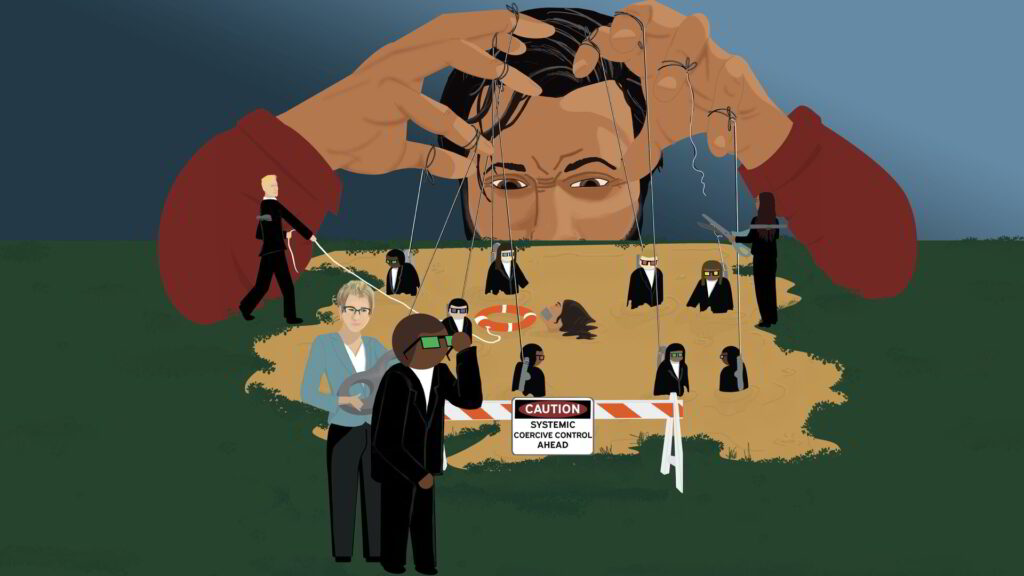
Is coercive control intentional?
Coercive controllers are the puppeteers of manipulation! Every strategy they employ against their chosen victims at the start of the “relationship” to fabricate The Mirage, is also utilized on friends, family, and anyone within their surrounding circle. The implementation of these coercive control tactics usually intensifies when their main target begins to comprehend the abuse. However, there’s no doubt, the coercive controller has likely been practicing manipulation and deceit from the get-go. Cunning coercive controllers understand that no one relishes the experience of abuse, and when their control over their primary target strengthens, this person may begin to resist the abusive behaviors causing them harm and/or distress. As a result, they often introduce the Double Team strategy early on, in an attempt to thwart any possible escape plans

Coercive Control Research Study Opportunity
This research study on coercive control is being conducted by Kacey Baker, a master’s student in the psychology of coercive control program at the University of Salford. If you have been targeted by coercive control, please consider participating. Here are the important details: I am a researcher from The University of Salford conducting a study titled Investigating the potentiality of an “Extent of Coercive Control Universal Scale” – an exploratory study as part of my master’s programme dissertation in the Psychology of Coercive Control (supervised by Dr Rod Dubrow-Marshall). The purpose of this study is to develop and validate the ‘Extent of Coercive Control Universal Scale,’ a tool designed to assess experiences of coercive control in different environments such as domestic situations, workplaces, cults, and
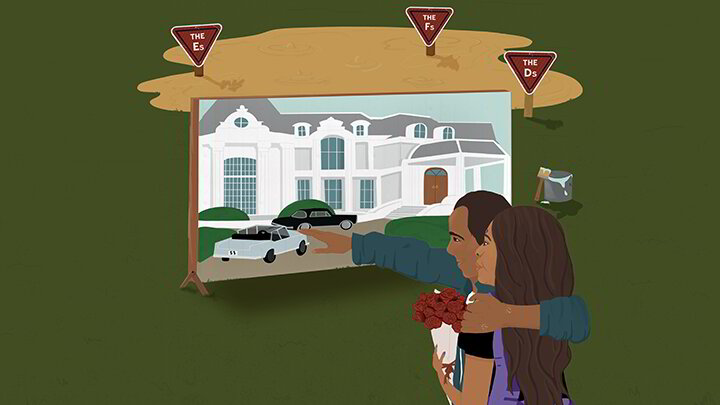
What are the signs of coercive control?
Coercive control is a complex, nuanced, and dangerous pattern of abuses of power. It is the pattern of behavior that establishes and maintains oppression, and it is often said to be invisible in plain sight. In order to be able to see the signs of coercive control, we need to understand the biological, psychological, and social forces that are keeping coercive control invisible. In today’s blog post, I’ll be discussing the initial trio of signs that constitute The Mirage™ in coercive control. Recognizing these preliminary indicators may not prevent you from being targeted, but it could potentially help you from becoming ensnared, and eventually entrapped, in the bio-psycho-social quicksand of a coercive controller. The Quicksand Model™ of Coercive Control has been meticulously crafted to expose the
Context is King in Cases of Coercive Control & Domestic Violence
Commencing prior to 1970, the battered women’s movement, spearheaded by survivors and driven by aspirations to diminish domestic violence and safeguard women seeking refuge, initially framed domestic violence through a lens that persists in law enforcement and the legal system today. This lens, known as the violent incident model, continues to shape perceptions and responses to domestic violence. The violent incident model proves to be especially inadequate when applied to the intricate and nuanced patterns of behavior characteristic of domestic abuse, domestic violence, and coercive control. Why? Because relying solely on this lens to evaluate cases, particularly those involving coercive control, is akin to judging a book solely by its cover. By focusing solely on individual incidents, the most crucial elements of the pattern—the context—are overlooked, thereby
Victim or Victim Mentality? The Karpman Triangle & Coercive Control
Have you ever found yourself unjustly shouldering the blame for the actions of your coercive controller? Victim-blaming is a pervasive issue, particularly in cases involving coercive control. Unveiling the invisible nature of coercive control is crucial to understanding this phenomenon. Despite its prevalence, coercive control remains unnoticed in plain sight. Imagine a scenario where evidence is abundantly available, easily identifiable for those in the know, yet elusive to those unaware of its existence – a hidden reality right before our eyes. Let’s explore the reasons behind victim-blaming, demystify the covert nature of coercive control, and empower ourselves with knowledge to break free from its insidious grasp. In this discussion, I’ll explore the Karpman Triangle, a well-known model for understanding dysfunction in relationships. We’ll delve into how
Consent & Coercive Control
Coercive control laws are being proposed and passed around the world. Laws that define coercive and controlling behaviors began in the UK, and Australia, Scotland, Canada and the US are taking steps to address coercive control in criminal and/or civil legislation. But coercive control legislation is moving slowly, and I believe one big reason for that is not that we haven’t defined what coercive control IS, but that we have not defined what it is NOT. You see, at it’s most basic, coercive control is a pattern of behaviors that violate another person’s autonomy. It is a pattern of abuses of power. When one person ignores another person’s right to their own thoughts, feelings and behaviors, in order to control or dominate them, that IS coercive control. And definitions of coercive control
Partnership Systems vs Domination Systems & Coercive Control
This blog is a shout out to my colleague Elle Kamihira for her podcast Subject to Power and the terrific interview she conducted with Riane Eisler, titled Systems of Peace. As I continue to develop my Quicksand Model™ of Coercive Control I often come across new, and not so new, research and theories that are compatible and useful enhancements to my model. Riane Eisler’s work on partnership systems and domination systems definitely fits that bill. “Riane Eisler is a social systems scientist, cultural historian, futurist, and attorney whose research, writing, and speaking has transformed the lives of people worldwide.” Just like the Quicksand Model™, the partnership domination continuum is a systems-based approach to transformation (which can be especially important when addressing things like domestic abuse and coercive control). I have a deep appreciation for this model!
#Gaslighting – Webster’s Word of the Year for 2022!
Gaslighting is the term used for harming a person through manipulation and deception in order to make them believe they are going crazy. Webster defines it as: “psychological manipulation of a person usually over an extended period of time that causes the victim to question the validity of their own thoughts, perception of reality, or memories and typically leads to confusion, loss of confidence and self-esteem, uncertainty of one’s emotional or mental stability, and a dependency on the perpetrator” 2022 has revealed many examples of gaslighting in the media, politics, in family court and in criminal court. Gaslighting is often the foundation upon which a pattern of coercive control is established. Gaslighting is designed to make a person doubt themselves, and the victim’s doubt that