By Kate Amber, MSc, Founder of End Coercive Control USA

Key Takeaway:
This week, Donald Trump’s escalating attacks and desperate deflections are textbook examples of how character-disordered coercive controllers unravel when their false narratives collapse. As the public begins to see behind the mirage, the tactics of DARVO and truth manipulation become more frantic—and more transparent.


As an expert in coercive control and the creator of The Quicksand Model®, I’ve spent years teaching professionals and survivors alike how to recognize the patterns of domination, gaslighting, and narrative manipulation that define coercive and controlling abusive power. This week, the US political landscape has provided a stark, public demonstration of these dynamics—on a national stage... Again!

Donald Trump’s behavior over the past several days is a masterclass in the weapons of coercive control, with a primary focus on the goal of Evading accountability through Escalation. As the House moves closer to releasing the full files on Jeffrey Epstein—a convicted sex trafficker with whom Trump’s connections are both deep and well-documented—the president’s responses have become increasingly erratic, vindictive, and revealing.

The Quicksand Model® in Action: A Week of Escalation

Evading Accountability Through Escalation: The Overarching Goal of the Coercive Controller in The Quicksand Model®

Although coercive controllers have more than one goal, one of their central goals in The Quicksand Model® is the calculated effort to Evade accountability through Escalation. When a coercive controller senses their lies unraveling or their abuse of power over others slipping, they don’t retreat—they Double Down. Escalation can take many forms: ramping up public attacks, sowing fear and confusion, or shifting blame onto others in increasingly dramatic ways. The goal is always the same—to distract, destabilize, and overwhelm those who seek the truth, making it harder to hold the coercive controller to account. In Trump’s recent barrage of threats and scapegoating, we see this principle in action: rather than face scrutiny for his own actions, he amplifies his rhetoric and chaos, hoping to bury the truth beneath a flood of noise and intimidation. Recognizing this pattern is essential, because it reminds us that escalation is not a show of confidence, but a desperate attempt to escape the consequences that are closing in.

The primary strategy used by coercive controllers, especially during Escalation, is DARVO.

DARVO on Display: Deny, Attack, Reverse Victim and Offender

Let’s break down the pattern:

  • Deny: Trump has repeatedly denied any meaningful connection to Epstein, despite overwhelming evidence of their long-standing social, business, and personal ties. Flight logs, photographs, and over a thousand references in Epstein’s own emails paint a very different picture.
  • Attack: This week, Trump launched vicious personal attacks against Rep. Marjorie Taylor Greene and Rep. Thomas Massie—two Republicans who dared to support transparency and the release of the Epstein files. He withdrew endorsements, hurled insults (“Wacky Marjorie,” “traitor,” “loser”), and threatened to back primary challengers against them.
  • Reverse Victim and Offender: In classic DARVO fashion, Trump has tried to recast himself as the victim of a “hoax” orchestrated by Democrats, while demanding investigations into their alleged Epstein connections—despite the fact that his own ties are far more extensive and substantiated.

Key Finding:
DARVO is not just a tactic used in private relationships—it is a weapon of mass manipulation, deployed to confuse, intimidate, and distract the public from the truth.

The Breakdown of the False Narrative

The Quicksand Model® teaches us that coercive controllers rely on a carefully constructed mirage—a false narrative that shields their true intentions and behaviors. But as the evidence mounts and the public begins to see the dangerous quicksand of coercive control hiding behind this mirage, the controller’s tactics become more desperate and transparent.This week’s events are a textbook example:

  • Attacks on Allies: Trump’s public humiliation of Greene and Massie is not just about personal vendettas. It’s a warning shot to any Republican who might break ranks and support the release of information that could further expose his own vulnerabilities.
  • Desperate Deflection: By demanding that the Department of Justice investigate Democrats like Bill Clinton and Larry Summers for their Epstein ties—despite the lack of comparable evidence—Trump is attempting to muddy the waters and shift the focus away from himself.
  • Escalating Threats: Greene has reported receiving threats to her safety, directly attributing them to Trump’s inflammatory rhetoric. This is a classic escalation: when the mirage is revealed, the controller lashes out, hoping to reassert dominance through fear and chaos.
  • Tactic | Example from This Week| | Deny | “I know nothing about ‘the girls’... my relationship with Epstein was ‘very bad.’” | | Attack | “Wacky Marjorie,” “traitor,” “loser,” threats of primary challenges against Greene and Massie | | Reverse Victim/Offender | Accusing Democrats of orchestrating a “hoax,” demanding DOJ investigations into their Epstein connections |

Why This Matters: The Systemic Danger of Coercive Control

Coercive control is not just a private problem—it is a systemic one. When leaders use DARVO and other manipulative tactics to Evade accountability, they endanger not only individuals but the very fabric of democracy, freedom and human rights. The public shaming, gaslighting, and narrative manipulation we’ve witnessed this week are the same tools used by coercive controllers in homes, workplaces, and institutions across the country.

Call to Action:
We must recognize these patterns for what they are: not just political theater, but dangerous coercive and controlling abuses of power. Transparency, accountability, and survivor-centered protections are the antidotes to coercive control—whether in our personal lives or in the halls of government.

Conclusion: The Inevitable Reckoning

As the quicksand of coercive control is uncovered, the mirage of the coercive controller is inevitably revealed. Trump’s escalating use of DARVO and other weapons from The Quicksand Model® is not a sign of strength, but of breakdown. The more desperate the tactics, the clearer it becomes: the era of impunity for character-disordered coercive controllers is coming to an end.

Let us stand together, demand transparency, and refuse to be manipulated by those who would deny, attack, and reverse victim and offender to escape accountability. The truth is rising—and with it, the hope for a future free from coercive control.

Kate Amber, MSc Posted on: September 17, 2025

The recent assassination of Charlie Kirk has sent shockwaves through the nation, not only for the tragic loss of life but also for the disturbing patterns of coercive control that have emerged in the aftermath. As the founder of The Quicksand Model® and a lifelong supporter of ending coercive control (even though I didn't always know what it was called), I am compelled to examine how the administration’s and media’s responses to this event have mirrored the very dynamics of abuse and manipulation that our movement seeks to expose and dismantle. The reactions—marked by double standards, double speak, and the classic DARVO (Deny, Attack, Reverse Victim and Offender) maneuver—offer a sobering case study in how coercive control operates far beyond the private sphere, infecting our public discourse and political institutions.

In the immediate aftermath of Charlie Kirk’s murder, the administration and prominent Republican figures, including President Trump, wasted no time in shaping the narrative. Before any facts about the perpetrator were known, the talking points were clear and coordinated: this was the act of a “leftist lunatic,” a symptom of a supposed epidemic of left-wing violence, and a direct attack on conservative values. The media, in lockstep, amplified these claims, stoking fear and division. This rush to judgment exemplifies a common weapon of coercive control: the imposition of a single, self-serving narrative that silences dissent and precludes critical inquiry, which, within The Quicksand Model® falls under fraud.

Although the investigation is ongoing, as it unfolds it is becoming clear that the motivation for the killing is more complex, and most likely the actions of a single individual who was raised by a Republican Mormon family—and one who was regularly photographed with guns. As this information surfaced, the narrative shifted abruptly. Suddenly, the administration and its media allies pivoted to downplay the political motivations, emphasizing mental health and “lone wolf” explanations. This is a textbook example of double standards and double speak, both central to The Quicksand Model®. When the facts fit the preferred narrative, they are weaponized; when they do not, they are minimized or reframed. The rules change depending on who is implicated, revealing a deep hypocrisy at the heart of the response.

This pattern is not merely rhetorical; it is a form of psychological manipulation that mirrors the tactics of coercive controllers in abusive relationships. Double standards—where one set of rules applies to the in-group and another to the out-group—serve to maintain power and control, while double speak—weaponizing language to obscure, distort, or reverse meaning—confuses and destabilizes the public, making it harder to hold anyone accountable. These are not isolated incidents but part of a broader pattern of coercive control in political discourse, as research has shown. 

The president’s assertion that leftists are the primary source of political violence is not only misleading but directly contradicted by a wealth of data from government agencies and independent researchers. In fact, right-wing extremist violence has been responsible for the overwhelming majority of domestic terrorism fatalities in the United States over the past decade, accounting for approximately 75% to 80% of such deaths, while left-wing extremist incidents comprise only about 10–15% of incidents and less than 5% of fatalities. Most left-wing violence has targeted property rather than people, whereas right-wing attacks have resulted in far more casualties, including high-profile mass shootings. The FBI, DHS, and multiple academic studies have consistently identified racially or ethnically motivated violent extremists—particularly those on the far right—and anti-government extremists as the most persistent and lethal domestic terrorism threats in recent years. By perpetuating the false narrative that left-wing violence is the greater threat, political leaders and media outlets not only distort the facts but also engage in the very coercive control tactics—double standards and double speak—that The Quicksand Model® warns against.

Perhaps most insidious is the use of DARVO, a tactic I have long identified in my work. In the days following the assassination, we saw the administration and its supporters Deny any responsibility for the toxic political climate, Attack those who called for accountability or gun reform, and Reverse Victim and Offender by portraying themselves as the true victims of “media bias” and “leftist attacks.” This maneuver not only deflects blame but also serves to silence and intimidate critics, reinforcing the coercive controller’s grip on the narrative.

The Quicksand Model® teaches us that coercive control is not just about overt violence; it is about the subtle, persistent erosion of truth, trust, and agency. When those in power manipulate narratives, shift blame, and apply double standards, they are engaging in the same dynamics that trap targeted victims in abusive relationships. The public, in this sense, becomes collectively gaslit—unable to trust what they see and hear, and increasingly powerless to demand accountability.

As proponents of ending coercive control, we must call out these patterns wherever they appear. The assassination of Charlie Kirk is a tragedy, but the administration’s coercively controlling response is a warning. If we allow double standards, double speak, and DARVO to define our public discourse, we risk sinking ever deeper into the quicksand of coercive control. Our mission at End Coercive Control USA is to shine a light on these dynamics, demand transparency, and empower all people—survivors, citizens, and communities—to resist the pull of coercive control in every sphere of life.

While it is undeniable that Charlie Kirk’s views and actions were often provocative and incendiary—frequently sparking intense debate and controversy—he, like every American, was entitled to the fundamental right of free speech enshrined in the First Amendment. As we honor that right, it is imperative that we also remain vigilant in demanding that political figures, media organizations, and social media platforms do not misrepresent facts or manipulate narratives for partisan gain. Only by upholding both the freedom to speak and the responsibility to tell the truth can we foster a society that is both open and just not by succumbing to the politics of fear and control, but by recommitting ourselves to truth, accountability, and the relentless pursuit of justice for all.

Introduction to The Quicksand Model of Coercive Control

The Quicksand Model of Coercive Control, developed by (me) Kate Amber and utilized by End Coercive Control USA, is a survivor-centered, trauma-informed framework that explains the layered tactics and strategies coercive controllers use to entrap and dominate their targeted victims. This model categorizes coercive control tactics and strategies into the D's, E's, F's, and I's, offering a detailed understanding of how coercive control operates on psychological, biological, and social levels. It is a bio-psycho-social framework that takes a holistic and systems-based approach to explaining abuse, violence and oppression. By exploring these categories, we can better understand the mechanisms of coercive control and learn to dismantle the systems that enable coercive controllers and harm targeted victims.

The D's: The Weapons of Coercive Control: Double Standards, Double Binds, Double Speak, Double Down, Double Team, Double Cross, and DARVO

The "D's" in the Quicksand Model highlight the manipulative tactics and strategies abusers use to confuse, control, and dominate their targets.

Double Standards: Coercive controllers enforce one set of rules for themselves and another for their targets, creating an unfair and oppressive dynamic. For example, they may demand loyalty while being unfaithful themselves.

Double Binds: Targets are placed in no-win situations where any choice they make is wrong. This tactic creates confusion and helplessness, as the target feels they cannot succeed no matter what they do.

Double Speak: Coercive controllers use contradictory and deceptive language and communication to manipulate and gaslight their targeted victims. This tactic erodes trust in the target's own perceptions and reality.

Double Down: When confronted, coercive controllers intensify their controlling behavior rather than taking accountability. This escalation reinforces their dominance and silences the target of their abuse.

Double Team: Coercive controllers may enlist others to support their narrative or isolate the victim further, creating a sense of betrayal and amplifying the target's isolation.

Double Cross: Coercive controllers betray the trust of their targets, often by breaking promises or exploiting vulnerabilities. This tactic deepens the targeted victim's dependency and sense of betrayal.

DARVO (Deny, Attack, Reverse Victim and Offender): While The Doubles represent tactics of coercive control, DARVO is the coercive controller's most common strategy. DARVO is used by coercive controllers to Deny their actions, Attack the target for speaking out, and position themselves as the true victim (Reverse Victim & Offender). This strategy shifts blame and silences the targeted victim. 

The D's illustrate how coercive controllers entrap targets in quicksand using manipulation, deception, and tactics and strategies of coercion and control, leaving targets feeling trapped and powerless.

The E's: The Goals of Coercive Control: Ensnare, Entrap, Exploit, Erode, Prevent Escape Through Escalation, Erase, and Eradicate

The "E's" focus on the ways coercive controllers systematically dismantle a target's autonomy and sense of self. The E's are the coercive controllers goals which keep targets entrapped in quicksand, or return them to the quicksand, if they manage to temporarily escape.

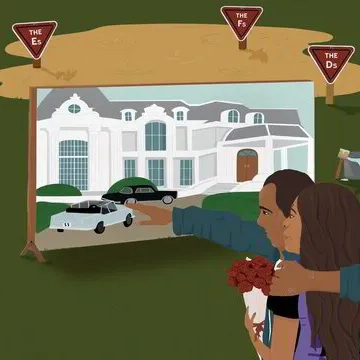
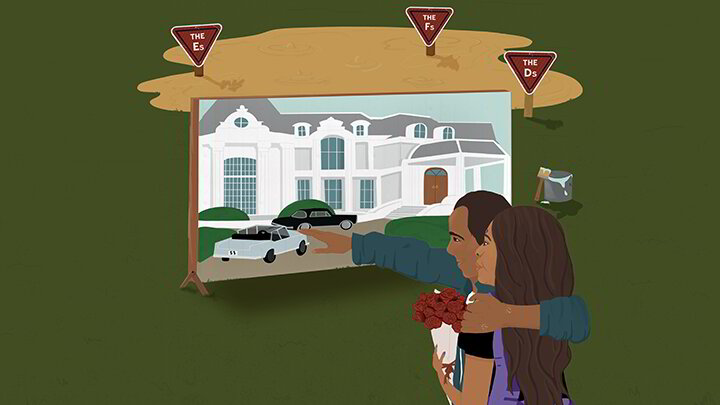
Ensnare: Coercive controllers lure targets into the quicksand with love bombing (manipulative kindness), mirroring, and future faking (which make up the mirage), only to entrap them in the quicksand of coercion and control that is hidden behind the mirage in the background (see image above).

Entrap: Targets are systematically entrapped in quicksand through isolation, financial control, legal manipulation, and various other psychological, biological and social tactics, making it difficult for them to leave.

Exploit: Coercive controllers take advantage of the target's normal human vulnerabilities, such as by violating or ignoring their emotional needs, forcing financial instability, or triggering their past trauma, to maintain control. Some coercive controllers intentionally choose strong, creative and highly capable targets, specifically to exploit the target's strengths, and feed off of them like a parasite.

Erode: Coercive controllers erode the target's sense of self, identity, and autonomy through constant criticism, gaslighting, and manipulation. Over time, targets may lose confidence in their ability to make decisions or live independently.

Prevent Escape Through Escalation: When targets attempt to leave or assert independence,  coercive controllers escalate their tactics and strategies. They do so by increasing the frequency and/or severity of their threats, violence, deception, or manipulation, to prevent their target's escape from the quicksand.

Erase: Coercive controllers attempt to erase the target's individuality, autonomy, and connections to others, leaving them entirely dependent on the abuser. Even after the target leaves the coercive controller, they often feel erased through the coercive controller's and/or system professional's silencing and invalidation of their experience.

Eradicate: In extreme cases, coercive controllers seek to completely eradicate their target. These are the cases that end in homicide, suicide, or homicide/suicide.

The E's demonstrate how coercive control systematically dismantles a target's autonomy and identity, leaving them feeling trapped and hopeless.

The F's: The Methods of Coercive Control: Force, Fraud, and Fear

The "F's" highlight the core mechanisms coercive controllers use to establish and maintain control over their targeted victims.

Force: Coercive controllers use physical, emotional, and/or psychological force to dominate their victims. This can include physical violence, threats, or coercion. Force can be blatant or subtle, and it often manifests as harsh punishments for non-compliance with the coercive controller's demands.

Fraud: Coercive controllers deceive their targets through lies, manipulation, or false promises, creating a false sense of security or trust. Once the target discovers that their coercive controller has been hiding things and lying to them, it can cause intense feelings of betrayal, known as betrayal trauma

Fear: Fear is a central tool of coercive control. Coercive controllers use credible threats, intimidation, and overt and implied consequences to keep targets compliant. Even one single act of physical violence can be enough to instill a deep feeling of fear in the target, leading to increased compliance, and autonomy erosion, over time.

The F's reveal the fundamental tools of coercive control, which rely on deception, intimidation, and violence to maintain dominance.

The I's: Coercive Control in The Law: Indignity, Isolation, Intimidation, Inequality, and Indoctrination

The "I's" focus on the ways abusers strip targeted victims of their dignity, independence, and agency. Indignity, isolation, intimidation and inequality are aspects covered by statutes against coercive control, and although indoctrination is not included in legal statutes, it is often a primary strategy utilized within a pattern of coercive control, especially within groups.

Indignity: Coercive controllers degrade and dehumanize their targets, stripping them of their dignity and self-worth. This can include verbal abuse, humiliation, or treating the target as inferior.

Isolation: Coercive controllers cut targets off from friends, family, and other support systems, leaving them unsupported and socially and emotionally dependent on the abuser.

Intimidation: Coercive controllers use threats, controlling body language, or tone of voice to instill fear and reinforce their dominance.

Inequality: At the heart of coercive control is a profound imbalance of power. Coercive controllers create a dynamic where they hold all authority, while the target is rendered powerless.

Indoctrination: Indoctrination is the overall strategy used by coercive controllers to systematically instill their beliefs, expectations, and rules into the target's mind through repetition and manipulation. This strategy creates a sense of inevitability and compliance, making it even harder for targets to free themselves from the quicksand.

The I's underscore how coercive control operates on multiple levels to dismantle the target's independence and reinforce systemic power imbalances. 

Conclusion

The Quicksand Model of Coercive Control provides a powerful framework for understanding the tactics, strategies, and impacts of coercive control. By examining the D's, E's, F's, and I's we can better recognize the tactics and strategies of coercive controllers and take steps to protect ourselves and our loved ones from this insidious pattern of oppression and domination.

NOTE: Leaving a coercive controller can be very dangerous, so it's important to seek help before doing so. Numerous resources are available on ECCUSA's resource page to assist you.

UPDATE: June 30, 2024 / The PsychoSocial Quicksand Model™ is still based on psychological, social and biological aspects of coercive control, but the name has now been shortened to The Quicksand Model™

The terms victim and target will be used interchangeably to indicate that victims are not to blame, and are most often directly targeted by coercive controllers. 

Coercive controllers use multiple tactics and strategies of coercive control to dominate their targets using the PsychoSocial Quicksand™. These strategies can be as straight-forward as physically forcing their target into submission, through physical violence, or as subtle and sophisticated as The Mirage™.

The coercive controller's strategic plan to dominate targeted victims using the PsychoSocial Quicksand™ of coercive control include strategic phases called The 5 Es. Don't think of The 5 Es as linear, because their use is much more flexible than that. The coercive controller may use the phases in order, but usually, these strategies are like tools in a coercively controlling toolbox. The coercive controller selects the tool or tools that best fit the task at hand. If one doesn't accomplish what the coercive controller is after, they may switch to another phase seamlessly, even combining phases to overwhelm a particularly strong and savvy target. 

1. Ensnare - in this phase the coercive controller ensnares the targeted victim in a trance using The Mirage™ (The Mirage™ is the first half of the Double Cross, which I will cover in a future blog).

2. Entrap - coercive controllers begin introducing, usually slowly, but sometimes quite rapidly, the tactics of Double StandardsDouble BindsDouble SpeakDouble Think, Double Cross & DARVO.  If the coercive controller uses the tactic of Double Team (aka enlisting flying monkeys) early on, it is often done secretly, behind the target's back, and therefore, is invisible (see Double Team explained in a future blog).

3. Exploit - once the target / victim has been ensnared and entrapped, the coercive controller can more easily exploit the victim for their resources, and use of the Doubles and DARVO often increase (this can become incredibly oppressive and, in the extreme, is akin to modern day slavery).

4. Prevent Escape through Escalation - targets often begin to wake up to the fact that they are being exploited, and sometimes resist. This makes it necessary for the coercive controller to escalate their use of the Doubles and DARVO in order to prevent their target from escaping the PsychoSocial Quicksand™, so they can continue to exploit them. If physical violence has not been used by the coercive controller previously, a victim using #ActsOfResistance, can lead a coercive controller to escalate to physical violence. This is especially true if the target separates from the coercive controller. Research shows that separation is the most dangerous time for a targeted victim. 

5. Eradicate - if the target somehow manages to escape the PsychoSocial Quicksand™, the coercive controller will either attempt to Re-Entrance the target back into the PsychoSocial Quicksand™ or Eradicate them altogether (eradication correlates with stages 6, 7 & 8 of the 8 stages of domestic violence homicide/suicide). 

To ensnare a target, coercive controllers use of three highly manipulative and deceptive tactics: mirroring, future-faking, and manipulative kindness (aka love-bombing). These three tactics, especially when used together, combine to form an illusion intended to override critical thinking and put the target into a trance-like state. I call this combination of tactics The Mirage™.  While the target is being ensnared by The Mirage™, they are tricked, as if by magic (neuromagic to be specific) into seeing the coercive controller as their hero and/or soul-mate. The Mirage™ is critical for laying the foundation for the other phases of the coercive controller's plan.

Let's take a look at how The Mirage™ in the Ensnare phase works.

The Mirage™ consists of combining the powerful tactics of mirroring, manipulative kindness (love-bombing) and future-faking, which coercive controllers use to facilitate the first phase of the PsychoSocial Quicksand Model's™ strategy, Ensnare.

During mirroring the coercive controller imitates the "gesture, speech pattern, or attitude" of their target. This tactic is commonly used by salespeople to create rapport, and build trust, with another person quickly. Mirroring helps increase liking, one of Robert Cialdini's seven principles of influence.

"Future faking is when someone uses a detailed vision of the future to facilitate the bonding and connection in a romantic relationship", and Manipulative kindness (aka love-bombing) is the use of deceptive, but seemingly loving, kind and/or extravagant gestures of affection and attention to manipulate or influence the target. 

When the coercive controller uses all three together the effect is to hijack the target's imagination, values, goals and dreams to quickly cause that person to believe the coercive controller can be trusted and has their best interests at heart. The mirroring and manipulative kindness create the illusion that they are "meant to be together", and the fake future the coercive controller paints causes the target to lose sight of present reality, ignore red flags, and focus instead on The Mirage™ that is hiding the PsychoSocial Quicksand™ lurking behind it, intentionally made invisible. If you are a highly creative and imaginative right-brained person like myself, you will be especially vulnerable to The Mirage™.

It is critical to understand that, first and foremost, The Mirage™ is an intentional use of tactics, part of an overall strategy, to dominate and subjugate the target. Many people still believe the myth that abusers / coercive controllers are unaware of what they are doing. I believed this myself for a long time. Then, once I started to doubt the myth's validity, I still vacillated between knowing I had been intentionally harmed and questioning that reality. This was mainly because of the constant gaslighting I was experiencing, which created my Double Vision. Even after I was finally sure that what I had experienced had been a strategic and sadistic intentional strategy to entrap and exploit me, I was thrust once again into doubt while conducting my research.

Two of my research participants were not convinced that coercive controllers act with intentionality. They had doubts, and their doubts were reasonable, given their experiences. However, after reviewing the interviews and conducting extensive additional research to definitively answer this question, this is what I discovered. As I discussed in previous blogs, there are two tactics that coercive controllers employ that deceive others, and even themselves, into believing their own lies: Double Think and Double Speak. I believe that the reason why so many targeted victims (and outsiders, including therapists) think that coercive controllers are not fully conscious of their actions is because the coercive controllers have so effectively deceived themselves (through Double Think), that when they lie (Double Speak) about their intentions, they often appear genuinely truthful. 

Double think is used by coercive controllers to "know but not know". It is a form of self-denial that permits them to temporarily block off or ignore parts of their knowledge and/or memory and claim they don't exist. Double Speak is then the way that Double Think manifests in their words and behaviors, where coercive controllers contradict themselves and use every manner of smoke-screening to avoid the negative truth about themselves.

Coercive controllers words and actions do not match, and while they may be incredibly adept at concealing it, they are fully aware of their own self "denial". 

Coercive controllers appear quite authentic when they employ mirroring, manipulative kindness and future-faking to create The Mirage™ for their targeted victim. These three tactics override the target's defenses by removing, or at least reducing, their critical thinking ability, and leave the victim vulnerable to entrapment, exploitation, escalation, and eventually (if the target attempts or escape), eradication!

Did your coercive controller use The Mirage™ to entrance you into PsychoSocial Quicksand™?

NOTE: This blog is written primarily for victimized mothers of coercive control. The statements within are not intended to imply that mothers are never abusive or coercively controlling, or that fathers are never victimized. Some are. However, the majority of coercive control within families is perpetrated by males against adult females and children, so this article focuses primarily on that evidence-based finding.

Let me start by saying that you have the right and the freedom to call these behaviors whatever you choose to call them. The following are my thoughts on the usefulness of using certain terms within the family court system in the US...

Parental Alienation Syndrome, Parental Alienation, and Alienation all refer to a theory created by Richard Gardner, who promoted victim blaming and pedophilia. (Read prior blogs on Parental Alienation here, and here). This theory, which is not evidence-based, refers to one parent intentionally turning the child(ren) against the other parent. 

Parental alienation is most often used in custody cases as a legal strategy, where coercively controlling parents (usually fathers) claim that the protective parent (most often the mother) has convinced the children to dislike the father and to make "false" allegations of abuse against him. In other words, parental alienation theory is used to DARVO the court into disbelieving valid abuse allegations and instead reversing the blame for the children's natural fear of the abusive parent onto the adult victim. 

There is no valid empirical evidence that mothers make false abuse claims and coach their children to turn against their father. This is a widespread misconception in family court, that false abuse claims are common. They aren't. Research indicates that false allegations of abuse are no more common than false allegations of other crimes. However, the misconception has taken root, co-opting legitimate research regarding alienating behaviors and estrangement. 

To be clear, there is evidence that some parents turn their children against the other parent. However, this is most often the case with the coercive controlling parent using the tactics, not the victimized one. 

Parental Alienation "experts" sprung up all over the US after Gardner's theory took root, and these "professionals" have been facilitated by the AFCC (Association of Family & Conciliation Courts) and the court evaluators who are indoctrinated into this dangerous theory. The AFCC has been so successful in using parental alienation to remove children from their protective mothers in the US that it has spread to most of the rest of the world. (Do I smell a class action lawsuit?)

On April 13, 2023 the United Nations banned the use of parental alienation theory. Check out what Doreen Ludwig, an expert on Govt-funded Custody Court Systematic Malfeasance, had to say about the AFCC and it's connection to the "father's rights" movement (I call it the abuser's rights movement). 

"AFCC members include judges, court employees, legal and mental health practitioners. AFCC’s genius is in this symbiotic relationship between the judiciary and those that profit from positions of appointment (judicial orders for services). An obvious, unethical interdependence reaps enormous profits for those who align themselves within this structure. AFCC’s publications and conferences bring an ever-increasing number of family court dignitaries into the fold. An illusion of legitimacy helps hide a subterranean layer of family court operators – those who willingly commit fraud and align themselves with the more nefarious principles of the father’s rights movement."

There are two main reason not to use the terms parental alienation syndrome, parental alienation, or even the further watered-down term "alienation". 

First,  we don't want to promote a debunked theory of Parental Alienation, which has led to misconceptions about tactics of child estrangement and primarily functions to remove children from protective parents and give them to abusive coercive controllers (usually fathers). And second, if you are a protective mother, claiming parental alienation is not likely to work for you in court anyway. 

Joan Meier's research showed that claiming alienation in family court really only works for fathers (usually coercively controlling fathers). When mothers claimed alienation, in the cases she reviewed, it rarely worked. The AFCC claims parental alienation is non-gendered, but that appears to be another deceptive smokescreen to protect their interests by falsely claiming they are unbiased. 

Unfortunately, the wide use of parental alienation theory, and especially this misconception that women lie about abuse, has caused a great deal of confusion for genuine victims of coercive control and domestic abuse who discover the theory on legitimate-sounding web sites promoting its use in family court. Promoters of parental alienation do not come right out and say they function (primarily) to protect coercive controlling abusers from accountability, so when targeted victims of coercive control read articles on parental alienation, they think this is what they are experiencing. 

What targeted victims of coercive control are really experiencing is just another tactic of coercive control, where their coercive controller is weaponizing the children, and the unscientific aspect of Gardner's theory, to maintain control over them and/or punish them for daring to leave.

But he IS turning my children against me, if I don't call it Parental Alienation Syndrome, what do I call it?

Great Question! After all, it is well-known to coercive control experts that coercive controllers are divisive and often turn their children against their protective parents in order to further isolate and control both their children and their adult targeted victims. So, when I recommend you NOT use terms related to parental alienation theory, I do so not because alienating children from their parents doesn't occur, but because parental alienation "experts" are using these terms to DARVO family court using deceptive means, and if you want to protect you and your children, while maintaining your integrity, you do not want to associate yourself with these "professionals" or this theory.

Instead I recommend terming it a tactic of coercive control, and more specifically, the term Dr. Emma Katz uses, parent-child relationship sabotage

Coercive control and parental alienation are diametrically opposed concepts, and coercive control has been widely researched, whereas parental alienation is based purely on Richard Gardner's own ideas. Coercive control research can be found in the related terms of undue influencebrainwashing, mind control, thought reformcoercive persuasiondomestic abuse etc.

While parental alienation relies on a simplistic patriarchal and misogynistic foundation... that women are "vindictive" and lie... coercive control is more nuanced and complex. Coercive control tactics and strategies can be detected and documented, whereas parental alienation is essentially "see, she must have told them to lie about me", and relies on implicit bias and "himpathy". There is no actual evidence supporting this aspect of parental alienation theory... only the suggestion that women are vindictive, and children love their parents, so therefore, if a child does not want to spend time with a parent, the other parent must have turned them against them. 

Parental alienation theory completely disregards what we know about children's developmenttraumaabuse, toxic stresscoercive controlACES etc., whereas coercive control is founded on these evidence-based principles Parental alienation theory that is often used by coercive controllers to entrap their targeted victims. It is a #DoubleBind, because once claimed in court, the person accused has no way to disprove it. Any attempt to disprove alienation would include proof that the coercive controller is abusive, and reinforces the abuser's claim that the victim does not support a relationship between the father and child. Since PAS relies on the false belief that women are deceptive and vindictive (misogyny), those who have internalized this implicit gender bias are often swayed to believe the coercive controller's claim and completely ignore all true evidence to the contrary (or worse, use it against the victim as further "proof" of alienation). 

Coercive control is different. Coercive control includes context, while parental alienation intentionally REMOVES context. Someone claiming parental alienation is most often using the theory to cover up their coercive control. If they have been accused of abuse, PAS becomes their defense... their legal strategy. In order to do this, they must decontextualize actions by each party. They must prevent the court from seeing the coercive control they have been perpetrating and shift the blame to their targeted victim. They do this by cherry picking information and re-framing party's actions using DARVO. They exaggerate the victim's responses to their coercive control and use these normal reactions to being tortured and terrorized against the targeted victim, often claiming the victim is "crazy" or "mentally unfit" to parent. Coercive controllers also regularly fabricate "evidence", which indoctrinated court professionals, unfortunately, often take at face value. 

Coercive control is backed up by evidence, and parental alienation is not. Coercive control shows a consistent pattern of (usually multiple forms) behaviors over time. Parental alienation claims are often no more than smoke and mirrors. This is why "parental alienation experts" shifting their language to that of coercive control is dangerous. These "parental alienation experts" are attempting to exploit the legitimacy of coercive control to continue their systemic coercive control within the family court system. If a person used to promote parental alienation and now they are claiming it's the same thing as coercive control... Watch Out!

If you are a protective parent, especially if you are a protective mother, parental alienation theory is NOT your friend! If your partner/ex-partner is sabotaging your relationship with your child(ren), what you are experiencing is coercive control and parent-child relationship sabotage (or the newest term Child and Mother Sabotage - CAMS).... NOT parental alienation . If we are going to shift the family court system away from unscientific biased theories to evidence-based science that protects children and targets of coercive control, it is critical that we use the appropriate language. 

And I didn't even get into the horrors of reunification therapy, the abusive "cure" promoted by "experts" in parental alienation. Perhaps I will tackle that in a future blog.

What are your thoughts? Feel free to comment below.

If you are a protective parent attempting to navigate the family court system in the US (or any other country), you have probably run into the problematic use of the terms Parental Alienation Syndrome, Parental Alienation and Alienation... all of which refer to the same phenomenon. (Read my prior blog on Parental Alienation here, if you are unfamiliar with these terms and their deceptive use by coercive controllers in family court).

Parental Alienation "experts" have infiltrated the family court system in many countries, causing a hostile environment for protective parents, especially mothers, when attempting to prevent their children from being further coercively controlled by the child's coercively controlling parent. Parental Alienation theory has been debunked by every credible organization, including the UN. It does not, and has not ever, been included in the DSM.  However, untrained professionals, often monetarily motivated, continue to introduce this unscientific theory, created by Richard Gardner, an advocate of pedophilia, sexual sadismnecrophiliazoophiliacoprophiliaklismaphilia and urophilia, into family court proceedings as a strategic means of obtaining custody of children for coercive controllers and other abusive parents. 

The introduction of PAS into a family court case is often the death nil for protective mothers (and sometimes protective fathers) facing a sadistic coercive controller in family court. 

If that weren't bad enough, there appears to be a distressing trend emerging. Parental Alienation "Experts" appear to be re-branding themselves as Coercive Control Experts. As a legitimate coercive control expert, with decades of lived experience, and a master's degree in the psychology of coercive control, this infuriates me! 

Let me be crystal clear... Parental Alienation Syndrome is NOT Coercive Control! These two phenomena are diametrically opposed. You are either on the side of the debunked science of parental alienation, assisting coercive controllers to DARVO family court into granting custody of a child to an abuser, or you are an expert in coercive control, helping to prevent a coercive controller from obtaining custody of a child. While a person may be an expert on both terms, as I am, if you are making claims that coercive control and parental alienation are the same, you are either highly confused, or, more likely, a wolf in sheep's clothing and NOT an expert with true scientific knowledge! 

The parental alienation "experts" appear to be trying to cash in on the growing trend to criminalize and/or include coercive control into legislation. As the term coercive control becomes more widely recognized and respected, and parental alienation further debunked and dismissed, these so called "experts" need a new gravy train. They have been parasites on the family court system for decades now, robbing protective parents of healthy relationships with their children, and now they are jumping ship and turning to coercive control to save them. 

BEWARE! If someone claims to be a proponent of both parental alienation AND coercive control, I recommend you do your due diligence before hiring someone who may turn out to promote the exact OPPOSITE of what you need to protect your children!

In my next blog I will go into how and why this confusion is taking hold and the importance of keeping the terms Parental Alienation and Coercive Control from becoming synonymous... especially in family court proceedings.

As I have discussed before in previous blog posts, DARVO is perhaps the most effective and often used strategy of coercive controllers. And of the possible uses of DARVO, Parental Alienation Syndrome (PAS) or Parental Alienation (PA) is arguably the most commonly used DARVO strategy of coercive controllers in family court.

PAS is a theory created by Richard Gardner, a child psychiatrist, who developed the theory exclusively from his own work, and without any empirical evidence in 1985. He specifically created it for custody cases and used it often "on behalf of father's accused of molesting their children". This theory became widely touted by groups formed under the deceptive misnomer of "father's rights". What these groups are actually pushing are abuser's rights. They want to obscure the fact that they are abusive by using DARVO and PAS to paint the victim as the perpetrator. 

How do DARVO and PAS work together in family court to protect abusers from accountability and demonize the protective parent? 

When a protective parent accuses a partner or ex-partner of abuse, domestic violence, or coercive control, whether that's abuse of the adult survivor and/or the children, attorneys worldwide have learned that the most effective legal strategy to hide the fact that their client is a coercive controller is to DARVO the court. 

DENY: "Your honor, my client would never abuse his ex-wife or children. My client is a loving father who just wishes to maintain contact with the children that he desperately loves. He works hard every day to provide for them, and he is insulted by these baseless accusations against him."

ATTACK: "It is sad to say, but Ms. ______, has mental health issues. She is an addict and regularly neglects and abuses the children. Because she was abused as a child, she thinks everyone is abusive. That is why she has falsely accused my client of abuse."

REVERSE VICTIM & OFFENDER: "Ms. _____ has alienated my client's children from him and has made him out to be a monster. She withholds the children from him, because she is vindictive, and she only wants full custody so that she can bleed my client dry through child support."

This strategy, unfortunately, is incredibly effective in family court, where most judges are untrained and hold implicit bias against mothers who allege abuse. It is so effective that many attorneys advise their clients NOT to raise abuse claims, no matter how egregious or provable, because the very presence of abuse allegations raise suspicion in the eyes of uneducated biased courts. 

Joan Meier's research uncovered significant gender bias in US family courts when abuse is alleged, and she found that counter claims of parental alienation further reduced protective mothers' chances of obtaining custody. Here are some of her findings:

In cases where alienation is NOT cross-claimed:

- "Courts accept Mothers’ reports of Fathers’ abuse less than half the time (41%)"

- "Courts are far less likely to accept child abuse claims than partner violence. (DV)." For child abuse, courts only credit claims 29% of the time and for child sexual abuse only 15%.

When alienation IS cross-claimed:

"Alienation cross-claims dramatically reduce rate of acceptance of abuse - especially child abuse (average: 23%)". In these cases DV is credited only 37%, child abuse 18% and child sexual abuse is only credited (believed) 2% of the time.

Although previous research studies have revealed that 50-73% of cases of child sexual abuse are valid, Meier's research showed that only 1 out of 50 cases of child sexual abuse was believed in US family court between 2005-2014.

These figures are astonishing and outrageous! But they are not surprising to those of us who work in the field or to survivors of coercive control. Every day I receive phone calls from protective parents, mostly moms, desperate to protect their children from a coercive controller in family court.

Last year I lost primary custody of my child to a convicted family violence perpetrator whom a jury found guilty of family violence assault with bodily injury, and who repeatedly violated a family violence protective order. My coercive controller's deceit and manipulation were not only invisible to the court, his unsubstantiated lies were taken at face value, while my actual evidence of abuse was ignored.

Meier's research did not distinguish between alleged cases of family violence and proved cases. However, my own experience, and that of my clients, tells me that family court judges are regularly prioritizing father's rights over the well-being and safety of survivors and their children by placing children into the hands of known abusers. 

Attorneys, judges, GALs, court evaluators, social workers, therapists, police, and all other professionals who come in contact with coercive controllers (often mislabeled "high conflict" cases) need to learn about the strategy of DARVO and how Parental Alienation Syndrome, and all it's permutations, are actually EVIDENCE of coercive control. That is what I testify to, when I am called as an expert witness in cases of coercive control. Persons who use DARVO and claim "alienation" are not victims, they are actually perpetrators exploiting the system to avoid accountability and continue their coercive control over the adult and child survivor.

THE GOOD NEWS!

On April 13, 2023 the United Nations released information, recommendations and warnings about the use of Parental Alienation pseudo-science within the family court systems worldwide. This is fantastic news! Hopefully, it will begin to undo some of the damage DARVO and PAS have done to protective parents and children across the globe. 

UPDATE: NOVEMBER 2, 2023:

New research published October 2023 has established a new term for interfering in the relationship between a mother and child. It has been termed Child And Mother Sabotage (CAMS), and pertains to coercive and controlling behaviors by a father against his child and the mother of his child. THIS is the term to use if you are a protective mother who's relationship has been damaged by your child's coercively controlling other parent. Dr. Emma Katz, one of the world's leading researchers in the field of coercive control of children and mothers, wrote this compelling article on the term child and mother sabotage (CAMS), just this week.

Keep the term child and mother sabotage (CAMS) in mind while reading the following article, originally published January 2023.

The proliferation of the terms parental alienation syndrome, parental alienation, and alienation in family court are so frequently used that both coercive controllers and survivors of coercive control are using them to describe what is happening to their children when the "couple" separates or divorces. This is problematic. Why? Because parental alienation was created as a deceptive and manipulative strategy for coercively controlling and abusive parents to avoid and deflect allegations of domestic violence, domestic abuse, child abuse, child sexual abuse, and coercive control in family court. In short... Parental Alienation Syndrome, and all variations of it, including parental alienation, and simply, alienation, are primarily being used to DARVO court professionals, especially those in family court and child protection, into thinking that the protective parent is alienating the abusive parent from their children. As a DARVO tactic of coercive control, Parental Alienation allegations are taking the focus off of protecting children, and instead are being weaponized to protect and embolden coercively controlling abusers. 

In my last blog post I explained how guilty coercive controllers often use DARVO to avoid consequences, play the victim, and flip the script to blame the victim. Victim blaming is rampant in our county (the US) as it is in most countries around the world. Society's inclination for victim blaming makes DARVO incredibly effective as a smokescreen for coercive controllers to maintain plausible deniability and hide their pattern of coercive control in plain sight to silence the whistleblower. 

Back to Parental Alienation Syndrome and why survivors need to be cautious using this term. PAS, or "Parental Alienation Syndrome" is a theory. It is not based on empirical evidence. It was created by a man named Richard Gardner who, in addition to claiming that abuse allegations are often false, also believed incest, child sexual abuse and pedophilia are normal and healthy for children. He wrote and self-published a book on his Parental Alienation Syndrome theory, and he sent it to family court professionals. In his book Gardner basically DARVO'ed attorneys and judges into disbelieving legitimate claims of domestic violence, child abuse, and especially, child sexual abuse. Through deception and manipulation, Gardner convinced many many people that PAS is a valid and science-based approach to determining the validity of allegations of abuse (which, of course, it is not). 

Gardner misled court professionals, including judges, attorneys, guardians ad litem, custody evaluators, etc. to believe that the majority of abuse allegations brought by mostly mothers, are false. This incorrect assumption, that most allegations are false, is now the predominating belief in family court. The truth is that research has found that most allegations, nearly ALL allegations of abuse are true. False allegations of domestic violence and child abuse are rare. But Gardner convinced courts that if abuse allegations are raised, they are most likely an attempt by the mother to retaliate against the father in order to get a leg up in family court. This has led to a pervasive incorrect belief that women lie in family court and that fathers need to be protected from abuse allegations. If child does not wish to have contact with the "alleged" perpetrator, Gardner has instilled the belief that it is a sign that the accuser has alienated the children. This assumption, the entire foundation of PAS, is not only false, it is incredibly dangerous, especially to targets, victims and survivors of coercive control, domestic abuse, domestic violence and child abuse. Family courts in the US are currently placing approximately 58,000 children each year into unsupervised contact with these abusers, in large part, because of Gardner's PAS theory.

So... if you are a victim, I do NOT recommend you use the term Parental Alienation Syndrome, or any of it's equivalents. "But... that's what my abusive ex is doing!" you say. "He is turning my children against me."

I don't doubt that if you are dealing with a coercive and controlling abuser that your children are being turned against you. As a matter of fact, there is probably a high likelihood that your abuser is turning a lot of people against you.... or at least trying to. But if that is what your coercive controller is doing, it is not helpful to your case or your children to call it Parental Alienation. It's best to refer to it by another term. If we call it PAS, we add fuel and legitimacy to the LIE that when a child doesn't want to see a parent, and there have been abuse allegations (sometimes there's even documented proof of the abuse), then the child has been "alienated."

PAS is a theory, which in effect, only works for abusers to avoid accountability for their abuse, and legally embolden them to take custody from their adult victim. Joan Meier found in her research, conducted by the US Department of Justice, that although proponents of PAS claim it happens to both genders, that is NOT how it is playing out in family court. In family court Parental Alienation Syndrome is being used primarily by coercively controlling abusers to retaliate against adult and child victims of abuse. It is mainly being used by abusers as a weapon to take custody away from a parent who is trying to protect their child from their abusive and/or dangerous ex partner. 

Parental Alienation Syndrome as DARVO:

DENY: "I'm not abusive. I never hit my wife, and I would never harm my child." 

ATTACK: "She is to blame, not me. She drinks too much and she's a bad mother. She just doesn't want everyone to know she's been having an affair. That's why she says I'm abusive."

OR, the covert coercive controller's ATTACK: "I just don't understand why my ex wife hates me so much. I think maybe she just hates men. She was abused as a child, and has always struggled with her mental health, but I never imagined she would take it out on me and the children."

REVERSE VICTIM & OFFENDER: "I just want what's best for my children. I love my children. She won't let me see them. I miss them so much. How can I protect myself and the kids? She is turning the children against me."

DARVO using Parental Alienation Syndrome is very effective. 

So, if we can't call it Parental Alienation, what can we do if we are the survivor, and our coercive controller is turning our children against US? We need to use other terms, terms that accurately describe the behavior without legitimizing PAS. 

Instead of calling what your abusive ex is doing to turn your children against you Parental Alienation, which, for the most part is only used to protect abusers, I prefer to call it abuse by proxy or parent child relationship sabotage. I use the term parent child relationship sabotage when referring to an abuser harming the relationship between the protective parent and the child in an attempt to: gain sympathy, punish the adult victim, hide their own abuse or generally gain the upper hand. Parent child relationship sabotage is a term coined by Dr. Emma Katz in her ground-breaking new book Coercive Control in Children's and Mothers' Lives. Katz' research has shown the significant detrimental effects of coercive control on children, and especially on their relationships with their mothers, when a coercive controller uses this tactic.

Abuse by proxy is the term I use, and recommend, when referring to abusers using coercive control to manipulate others into either abusing the victim directly, or into viewing the victim through the coercive controller's distorted and potentially dangerous lens. Professionals, friends, family and community members are often easily manipulated into seeing the victim as the problem, at least in part, either through the use of PAS or some other form of DARVO.

"Examples of abuse by proxy include spreading lies about the victim to their friends and family, sabotaging their career by communicating with their employer and even calling upon the authorities equipped with false information."

Lying in family court, calling CPS with false allegations about a victimized parent, turning police against the victim, there are endless ways in which a coercive controller might use abuse by proxy and/or parent child relationship sabotage. These may seem to equate to PAS, but they are NOT Parental Alienation Syndrome. We must distinguish these coercively controlling behaviors from the weaponization of Parental Alienation Syndrome, which is, in and of itself, abuse by proxy and/or parent child relationship sabotage. 

If you are a target, victim or survivor of coercive control and need a coercive control expert witness or coercive control case assessment, you can book a free consultation here. 

If you are looking for a coercive control expert for speaking, training or consulting click here.

If you need coercive control resources go here.

Follow Us on Social Media
Privacy Policy - Terms and Conditions | End Coercive Control USA © 2025 / All Right Reserved.