
By Kate Amber, MSc, Founder of End Coercive Control USA
Key Takeaway:
This week, Donald Trump’s escalating attacks and desperate deflections are textbook examples of how character-disordered coercive controllers unravel when their false narratives collapse. As the public begins to see behind the mirage, the tactics of DARVO and truth manipulation become more frantic—and more transparent.
As an expert in coercive control and the creator of The Quicksand Model®, I’ve spent years teaching professionals and survivors alike how to recognize the patterns of domination, gaslighting, and narrative manipulation that define coercive and controlling abusive power. This week, the US political landscape has provided a stark, public demonstration of these dynamics—on a national stage... Again!
Donald Trump’s behavior over the past several days is a masterclass in the weapons of coercive control, with a primary focus on the goal of Evading accountability through Escalation. As the House moves closer to releasing the full files on Jeffrey Epstein—a convicted sex trafficker with whom Trump’s connections are both deep and well-documented—the president’s responses have become increasingly erratic, vindictive, and revealing.
Although coercive controllers have more than one goal, one of their central goals in The Quicksand Model® is the calculated effort to Evade accountability through Escalation. When a coercive controller senses their lies unraveling or their abuse of power over others slipping, they don’t retreat—they Double Down. Escalation can take many forms: ramping up public attacks, sowing fear and confusion, or shifting blame onto others in increasingly dramatic ways. The goal is always the same—to distract, destabilize, and overwhelm those who seek the truth, making it harder to hold the coercive controller to account. In Trump’s recent barrage of threats and scapegoating, we see this principle in action: rather than face scrutiny for his own actions, he amplifies his rhetoric and chaos, hoping to bury the truth beneath a flood of noise and intimidation. Recognizing this pattern is essential, because it reminds us that escalation is not a show of confidence, but a desperate attempt to escape the consequences that are closing in.
The primary strategy used by coercive controllers, especially during Escalation, is DARVO.
Let’s break down the pattern:
Key Finding:
DARVO is not just a tactic used in private relationships—it is a weapon of mass manipulation, deployed to confuse, intimidate, and distract the public from the truth.
The Quicksand Model® teaches us that coercive controllers rely on a carefully constructed mirage—a false narrative that shields their true intentions and behaviors. But as the evidence mounts and the public begins to see the dangerous quicksand of coercive control hiding behind this mirage, the controller’s tactics become more desperate and transparent.This week’s events are a textbook example:
Coercive control is not just a private problem—it is a systemic one. When leaders use DARVO and other manipulative tactics to Evade accountability, they endanger not only individuals but the very fabric of democracy, freedom and human rights. The public shaming, gaslighting, and narrative manipulation we’ve witnessed this week are the same tools used by coercive controllers in homes, workplaces, and institutions across the country.
Call to Action:
We must recognize these patterns for what they are: not just political theater, but dangerous coercive and controlling abuses of power. Transparency, accountability, and survivor-centered protections are the antidotes to coercive control—whether in our personal lives or in the halls of government.
As the quicksand of coercive control is uncovered, the mirage of the coercive controller is inevitably revealed. Trump’s escalating use of DARVO and other weapons from The Quicksand Model® is not a sign of strength, but of breakdown. The more desperate the tactics, the clearer it becomes: the era of impunity for character-disordered coercive controllers is coming to an end.
Let us stand together, demand transparency, and refuse to be manipulated by those who would deny, attack, and reverse victim and offender to escape accountability. The truth is rising—and with it, the hope for a future free from coercive control.
When we look back at history, the term “witch” sends a chill down our collective spine—not just because of what it represented, but because of what it enabled. For centuries, being called a witch was all it took for society to turn against you: your credibility was destroyed, your voice was silenced, and your fate was sealed. In my work as the founder of The Quicksand Model® and End Coercive Control USA, I see a chilling parallel in how the label “parental alienator” is used in today’s family courts. The witch hunts may be history, but the mechanisms of scapegoating and silencing—especially against protective mothers—are alive and thriving under new terminology.
The Quicksand Model® was born from my research and lived experience in the coercive control and domestic abuse fields. It illustrates how survivors of coercive control, when trying to protect themselves and their children, are pulled deeper into danger by the very systems meant to help them. Family courts, tragically, have become a central part of this quicksand.
Here’s how it works:
Just as women were once branded “witches” for daring to speak out or resist control, today protective parents—especially mothers—are branded “parental alienators” for asserting boundaries or seeking safety. The result? The more you try to protect your children, the deeper you sink into the quicksand of counter-allegations and institutional disbelief.
Parental alienation refers to a situation where one parent is accused of turning a child against the other parent, often in the context of custody disputes. While research recognizes that some cases involve genuine alienation, critics highlight that the concept is sometimes misused in legal settings. Recently, there has been an uptick in cases where protective mothers have been jailed for trying to safeguard their children from alleged abuse, raising concerns about how these frameworks are applied—particularly when the courts dismiss mothers’ concerns as "alienation." This trend underscores the urgent need for nuanced, trauma-informed approaches in family law.
Coercive control is not just an interpersonal tactic wielded by abusers; it is also systemic. Family courts, whether knowingly or not, have adopted frameworks and practices that mirror the dynamics of coercive control on an institutional scale. By rebranding the “witch” as the “parental alienator,” the system:
This is systemic coercive control: a process where the very structures tasked with protection become mechanisms of further entrapment.
We must recognize that “parental alienation” is often used against those who are already most vulnerable. Just as the witch trials punished women for defying the status quo, today’s family courts often punish mothers for trying to keep their children safe. The “parental alienator” label has become a modern tool of social control, wielded with the same disregard for evidence and the same appetite for scapegoats.The Quicksand Model® shows us that, once this label is applied, escape becomes nearly impossible. Protective parents are pulled under by legal processes that are stacked against them, with devastating consequences for both them and their children.
We cannot allow our family courts to perpetuate these modern-day witch hunts.
If you or someone you know is sinking in the quicksand of the family court system, know that you are not alone. At End Coercive Control USA, we are working to expose these patterns and motivate stakeholders to transform systems. Our mission is to ensure that the “witch hunts” of the past do not continue under new names and new excuses.
Let’s name the quicksand, expose the systemic coercive control, and end the cycle of rebranding victims as villains. The safety of children and survivors of abuse depends on our willingness to see—and challenge—these modern parallels.
With hope and solidarity,
Kate Amber MSc
Founder, The Quicksand Model® & End Coercive Control USA
Find resources, support, and more information about The Quicksand Model® at End Coercive Control USA.
Together, we can end systemic coercive control in family courts and throughout social systems worldwide.
Kate Amber, MSc Posted on: September 17, 2025
The recent assassination of Charlie Kirk has sent shockwaves through the nation, not only for the tragic loss of life but also for the disturbing patterns of coercive control that have emerged in the aftermath. As the founder of The Quicksand Model® and a lifelong supporter of ending coercive control (even though I didn't always know what it was called), I am compelled to examine how the administration’s and media’s responses to this event have mirrored the very dynamics of abuse and manipulation that our movement seeks to expose and dismantle. The reactions—marked by double standards, double speak, and the classic DARVO (Deny, Attack, Reverse Victim and Offender) maneuver—offer a sobering case study in how coercive control operates far beyond the private sphere, infecting our public discourse and political institutions.
In the immediate aftermath of Charlie Kirk’s murder, the administration and prominent Republican figures, including President Trump, wasted no time in shaping the narrative. Before any facts about the perpetrator were known, the talking points were clear and coordinated: this was the act of a “leftist lunatic,” a symptom of a supposed epidemic of left-wing violence, and a direct attack on conservative values. The media, in lockstep, amplified these claims, stoking fear and division. This rush to judgment exemplifies a common weapon of coercive control: the imposition of a single, self-serving narrative that silences dissent and precludes critical inquiry, which, within The Quicksand Model® falls under fraud.
Although the investigation is ongoing, as it unfolds it is becoming clear that the motivation for the killing is more complex, and most likely the actions of a single individual who was raised by a Republican Mormon family—and one who was regularly photographed with guns. As this information surfaced, the narrative shifted abruptly. Suddenly, the administration and its media allies pivoted to downplay the political motivations, emphasizing mental health and “lone wolf” explanations. This is a textbook example of double standards and double speak, both central to The Quicksand Model®. When the facts fit the preferred narrative, they are weaponized; when they do not, they are minimized or reframed. The rules change depending on who is implicated, revealing a deep hypocrisy at the heart of the response.
This pattern is not merely rhetorical; it is a form of psychological manipulation that mirrors the tactics of coercive controllers in abusive relationships. Double standards—where one set of rules applies to the in-group and another to the out-group—serve to maintain power and control, while double speak—weaponizing language to obscure, distort, or reverse meaning—confuses and destabilizes the public, making it harder to hold anyone accountable. These are not isolated incidents but part of a broader pattern of coercive control in political discourse, as research has shown.
The president’s assertion that leftists are the primary source of political violence is not only misleading but directly contradicted by a wealth of data from government agencies and independent researchers. In fact, right-wing extremist violence has been responsible for the overwhelming majority of domestic terrorism fatalities in the United States over the past decade, accounting for approximately 75% to 80% of such deaths, while left-wing extremist incidents comprise only about 10–15% of incidents and less than 5% of fatalities. Most left-wing violence has targeted property rather than people, whereas right-wing attacks have resulted in far more casualties, including high-profile mass shootings. The FBI, DHS, and multiple academic studies have consistently identified racially or ethnically motivated violent extremists—particularly those on the far right—and anti-government extremists as the most persistent and lethal domestic terrorism threats in recent years. By perpetuating the false narrative that left-wing violence is the greater threat, political leaders and media outlets not only distort the facts but also engage in the very coercive control tactics—double standards and double speak—that The Quicksand Model® warns against.
Perhaps most insidious is the use of DARVO, a tactic I have long identified in my work. In the days following the assassination, we saw the administration and its supporters Deny any responsibility for the toxic political climate, Attack those who called for accountability or gun reform, and Reverse Victim and Offender by portraying themselves as the true victims of “media bias” and “leftist attacks.” This maneuver not only deflects blame but also serves to silence and intimidate critics, reinforcing the coercive controller’s grip on the narrative.
The Quicksand Model® teaches us that coercive control is not just about overt violence; it is about the subtle, persistent erosion of truth, trust, and agency. When those in power manipulate narratives, shift blame, and apply double standards, they are engaging in the same dynamics that trap targeted victims in abusive relationships. The public, in this sense, becomes collectively gaslit—unable to trust what they see and hear, and increasingly powerless to demand accountability.
As proponents of ending coercive control, we must call out these patterns wherever they appear. The assassination of Charlie Kirk is a tragedy, but the administration’s coercively controlling response is a warning. If we allow double standards, double speak, and DARVO to define our public discourse, we risk sinking ever deeper into the quicksand of coercive control. Our mission at End Coercive Control USA is to shine a light on these dynamics, demand transparency, and empower all people—survivors, citizens, and communities—to resist the pull of coercive control in every sphere of life.
While it is undeniable that Charlie Kirk’s views and actions were often provocative and incendiary—frequently sparking intense debate and controversy—he, like every American, was entitled to the fundamental right of free speech enshrined in the First Amendment. As we honor that right, it is imperative that we also remain vigilant in demanding that political figures, media organizations, and social media platforms do not misrepresent facts or manipulate narratives for partisan gain. Only by upholding both the freedom to speak and the responsibility to tell the truth can we foster a society that is both open and just not by succumbing to the politics of fear and control, but by recommitting ourselves to truth, accountability, and the relentless pursuit of justice for all.
As a researcher and consultant specializing in coercive control patterns, this week's exposure of Signal messages regarding Yemen bombing plans presents a textbook case of systemic coercive control tactics. Through the lens of The Quicksand Model®, we can clearly identify three distinct tactics being used in combination: Double Speak, Double Down, and Double Standards. Let's examine how these tactics mirror the same manipulative behaviors we observe in interpersonal coercive control situations.
Double Speak: The Art of Deceptive Communication
The White House's response to The Atlantic's exposure of sensitive military communications exemplifies classic Double Speak - language designed to obscure truth and avoid responsibility.
When confronted with evidence of detailed operational plans shared via Signal, including specific information about F-18 fighter jets, MQ-9 drones, and Tomahawk missiles, officials employed carefully crafted language to minimize and distort the reality of the situation.
The messages shared in the "Houthi PC Small Group" chat contained explicit details about warplane launches and bomb drops.
Yet, the administration's response demonstrated the hallmark manipulation tactic of Double Speak, weaponizing communication to reframe reality - a classic element of coercive control where perpetrators attempt to gaslight their targets by denying obvious truths.
Double Down: Amplifying Denial in the Face of Evidence
When confronted with evidence, both Pete Hegseth and Donald Trump exhibited another classic coercive control tactic: doubling down on denial. Pete Hegseth, Secretary of Defense, repeatedly insisted that "NO WAR PLANS" were shared, despite documented evidence to the contrary. President Trump similarly supported this narrative, maintaining that critics were exaggerating the situation.
This pattern of doubling down mirrors what we observe in The Quicksand Model® of coercive control, where perpetrators intensify their denials when confronted with evidence of their actions. The more evidence emerges, the more forcefully they deny, creating a psychological quicksand that pulls victims deeper into confusion, cognitive dissonance, and self-doubt.
Double Standards: The Hypocrisy of Selective Outrage
Perhaps the most striking parallel to coercive control dynamics is the blatant double standard displayed in this situation. The same Republican figures who led chants of "Lock her up" regarding Hillary Clinton's email server have suddenly adopted a remarkably different stance when their own handling of sensitive information comes under scrutiny.
During the Clinton email controversy, Republicans, including Donald Trump and Pete Hegseth, argued that any security professional would face severe consequences for similar conduct. Yet, when confronted with their own sharing of military operational details through a public messaging app, they've dismissed concerns and minimized the potential security implications.
The Quicksand Model® Connection
These three D's - Double Speak, Double Down, and Double Standards - form a powerful triumvirate of coercive control tactics that we've documented extensively in The Quicksand Model®. As outlined in our recent publication "Targeted & Entrapped: Understanding the Quicksand Model® of Coercive Control," these tactics are used to entrap and dominate not just individuals, but entire institutions and public discourse.
The Yemen Signal messages scandal demonstrates how systemic coercive control operates at the highest levels of government, using the same tactics we observe in interpersonal abuse. The administration's response employs Force (through aggressive denial), Fraud (through deceptive language), and Fear (through attempts to intimidate critics) - the three F's, or methods, of coercive control.
Conclusion
This incident serves as a powerful reminder that coercive control tactics don't just operate at in abusive "relationships" - they can be deployed by institutions and power structures to manipulate public perception and avoid accountability. By understanding and identifying these patterns through frameworks like The Quicksand Model®, we can better resist their impact and work toward creating systems of true accountability and transparency.
The parallels between individual coercive control and institutional manipulation are stark and concerning. As we continue our work at End Coercive Control USA, cases like this provide crucial evidence of how coercive control tactics can scale from personal relationships to national security issues, affecting millions of lives in the process.
___________________________________________
NOTE: Leaving a coercive controller can be very dangerous, so it's important to seek help before doing so. Numerous resources are available on ECCUSA's resource page to assist you.
As a survivor, researcher, and consultant in the field of coercive control, I've dedicated my career to understanding and combating the insidious tactics used by coercive controllers to manipulate and dominate others.
Today, we find ourselves facing a stark reality: the strategies of coercive control, as outlined in The Quicksand Model®, transcend personal relationships and infiltrate the very institutions meant to uphold our democratic values. The recent capitulation of Paul Weiss law firm and Columbia University to presidential threats serve as chilling case studies of how the F's of Force, Fraud, and Fear can erode the integrity of even our most respected institutions.
Let's examine these events through the lens of The Quicksand Model®, which provides a framework for understanding the dynamics of coercive control:
FORCE: In the case of Paul Weiss, we witnessed the raw power of executive authority being wielded as a weapon. The firm was faced with an executive order that threatened their very ability to operate, and made the firm vulnerable to predatory competitors.
Coercive controllers in the family use similar means of exposing targeted victims to predators within family courts, when they coerce and control unwitting (or predatory) professionals, like custody evaluators and guardians ad litem, to side with them and against their targeted victims.
This use of force manifested not through physical violence, but through the threat of legal and financial repercussions. The firm's agreement to dedicate $40 million in pro bono services and allegedly abandon their diversity, equity, and inclusion policies is a clear example of how force can be used to break down resistance and enforce submission.
FRAUD: The element of fraud in these cases is more subtle but equally pernicious. It manifests in the manipulation of facts and the creation of false narratives. For instance, the justification for these actions against Paul Weiss and Columbia University may have been presented under the guise of promoting fairness or protecting national interests. However, this framing obscures the true nature of these actions as attempts to control and suppress dissenting voices. This deception creates a sense of betrayal and confusion, further entrenching the coercive control.
FEAR: Perhaps the most potent tool in the arsenal of coercive controllers is fear. In the case of Columbia University, the threat of losing billions in federal funding created an environment of intense fear and uncertainty.
This fear led to sweeping changes in policies and practices, including "banning face masks on campus, empowering security officers to remove or arrest individuals, and taking control of the department that offers courses on the Middle East from its faculty."
The power of fear lies in its ability to create compliance even in the absence of direct threats. Other institutions, witnessing these consequences, may preemptively alter their behaviors to avoid similar repercussions, what is creating a "profound chilling effect," not just on universities, but any institution concerned with being placed in Trump's crosshairs.
A similar situation occurs with victims of sexual assault and domestic violence. Victims often hesitate to report their experiences due to a pervasive fear rooted in observing the public shaming and humiliation of those who have come forward before them. This fear of negative consequences, stemming from witnessing others' traumatic experiences with reporting, significantly contributes to the underreporting of sexual assaults and domestic violence.
The Quicksand Model® helps us understand how these elements of Force, Fraud, and Fear interact to create a coercive environment that can entrap even powerful institutions. Just as an individual might find themselves sinking deeper into coercive control quicksand in a "relationship," these institutions found themselves caught in the quicksand of coercive control, where every attempt to resist seemed to pull them in deeper.
What makes these situations particularly alarming is the scale at which they operate. When institutions of such stature capitulate to coercive control tactics and strategies, it sets a dangerous precedent that ripples throughout society. The coercive control strategies used against Paul Weiss and Columbia University are not isolated incidents but part of a broader pattern of coercive control that threatens the integrity of our institutions and, by extension, our democracy.
As advocates for ending coercive control, we must adapt our strategies to address these institutional-level threats. We need to:
- Empower institutions to recognize and resist coercive control tactics by providing them with training based on The Quicksand Model®, helping them identify and counter the F's of Force, Fraud, and Fear.
- Educate the public about the dangers of institutional betrayal through systemic coercive control, using The Quicksand Model® to illustrate how these dynamics affect their lives and society at large.
- Advocate for systemic changes and encourage institutional courage which can protect institutional independence and integrity, including legal safeguards against the weaponization of federal funding and executive power.
- Center the voices of those most affected by these power dynamics, ensuring that marginalized communities and perspectives are not further silenced by institutional capitulation.
The cases of Paul Weiss and Columbia University serve as stark reminders that coercive control is not just a personal issue but a societal one that threatens the very fabric of our democracy. By applying The Quicksand Model® to these institutional contexts, we can better understand the mechanisms of control and develop more effective strategies to combat them.
The path forward is challenging, but it's one we must walk together. By standing firm in our values, supporting one another, and tirelessly advocating for change, we can create a world where neither individuals nor institutions are trapped in the quicksand of coercive control. The health of our democracy depends on our ability to recognize, resist, and overcome these tactics of Force, Fraud, and Fear at every level of society.
#ActsOfResistance
___________________________________________
NOTE: Leaving a coercive controller can be very dangerous, so it's important to seek help before doing so. Numerous resources are available on ECCUSA's resource page to assist you.
____________________________________________
About the Author
Kate Amber, MSc, is dedicated to ending coercive control and promoting healthy relationships. Her work with End Coercive Control USA focuses on providing insights and support for those striving to create compassionate and respectful connections.
____________________________________________
The Quicksand Model™ Training Programs are available for schools, groups, religious organizations, non-profits, businesses, government etc.
---------------------------------------------------
Free Consultations: coercive control expert witness & coercive control consulting for survivors
Free Consultations: coercive control speaker, trainer, consultant or expert witness for organizations, companies & systems
Nothing in this blog is intended to diagnose or treat. It is for informational purposes only.
In the political landscape, power dynamics are always in play, but what happens when these dynamics shift from the usual tug-of-war into the realm of coercive control? As we reflect on Trump's time in office, we see parallels between his tactics and strategies and the pattern often seen in intimate relationships characterized by coercive control. Here, we'll use the Quicksand Model® of coercive control to dissect this further.
Before we delve into the specifics, let's set the stage with some understanding of the Quicksand Model® and its E's: ensnare, entrap, exploit, prevent escape through escalation, erase, and eradicate. These strategies and tactics of coercive control align with the coercive controller's goals for domination. They act as the blueprint for the coercive controller's actions, allowing them to systematically manipulate and dominate their target. Each 'E' corresponds to a specific goal the coercive controller seeks to tighten their grip, gradually turning the ground beneath the victim into quicksand. This model is not exclusive to personal relationships; it's broad enough to apply to any situation where one entity exerts a pattern of power over another, including, as we'll see, the realm of politics.
The Ensnarement: Crafty Maneuvers and Deception
Trump's election campaign can be seen as a masterful use of coercive control to ensnare the American people. He skillfully manipulated public sentiment with promises of a brighter future and a stronger nation. His charismatic speeches and grandiose vision acted as a mirage, drawing voters in. The deceptive tactics and strategies he deployed were akin to those often used in other coercive control scenarios, like domestic abuse and controlling groups, designed to gain trust and admiration.
Trump's savvy use of love-bombing (aka manipulative kindness) and future-faking reminiscent of a mirage in the desert, successfully ensnared the public, making them believe Trump would be the ideal leader for a prosperous future, and was a sign of the entrapment of the American populace to come.
The Entrapment: Deceptive Mirage of a Better Future
Once elected, the stage was set for a power play of unprecedented proportions. With Republicans holding sway in every government branch, Trump positioned himself where he could wield unchecked power, setting in motion the entrapment of the American people in the quicksand of coercive control. Trump, with his unchecked power, was emboldened to wield his authority in ways that bypassed the usual checks and balances of American politics. And, when he was checked, he simply acted anyway. This dominant position set the stage for potential exploitation, creating an ever more precarious situation for the American public.
The Exploitation: Flexing Global Might
Trump used his presidential power (and violations of The US Constitution) to exploit resources and exert control globally. From leveraging his position to exploit Ukraine's resources to imposing tariffs on foreign countries, his tactics were reminiscent of the exploitation stage of the Quicksand Model®. His threats to annex Canada, Greenland, and Gaza were further signs of this exploitation.
Note on the Nature of Coercive Control
While we've observed a seemingly linear progression of Trump's application of the E's of coercive control, it's important to clarify that coercive control does not typically follow a cyclical or linear pattern. As we'll explore, those who employ coercive control often revisit earlier tactics and strategies to reinforce their hold, particularly when they perceive that their targeted victim might be on the verge of escaping the quicksand of coercive control. This fluidity and adaptability are key characteristics of coercive control, making it a complex and often insidious form of domination.
The Escalation: Coercing Continuation
In a classic move to prevent the citizens of the US to escape from the quicksand Trump used both overt and covert threats and promises to force through the continuing resolution. This action served to accelerate the already spiraling abuses of power, mirroring the escalation often seen in coercive relationships.
Eradicating Opposition: The Deportation Orders
Trump's disregard for court orders, leading to the deportation of alleged gang members, is an example of strategic eradication in the Quicksand Model®. By removing those he saw as opposition, he further entrenched his power.
Erasing Identity: The Attack on DEI and Gender Terms
Trump continues to seek to erase identities that do not align with his vision. This involves removing Diversity, Equity, and Inclusion (DEI) programs, expunging the word "gender" from government websites, and encouraging the misgendering of LGBTQ and trans people, including a trans elected state representative. Coercive controllers often employ tactics and strategies that erase the identity of the controlled, and we are watching this play out on a national scale.
In conclusion, the patterns of coercive control that we often see in coercive and controlling relationships are disturbingly apparent in Trump's governance. Using the E's of the Quicksand Model®, we can analyze the dynamics of his reign, understand the tactics and strategies used, and hopefully, be better prepared to recognize and resist such patterns in the future. Perhaps we might even discover on a visceral level why it is so hard for targeted victims of domestic violence to escape coercive controllers, and stop asking the victim-blaming question "Why doesn't she just leave?"
___________________________________________
NOTE: Leaving a coercive controller can be very dangerous, so it's important to seek help before doing so. Numerous resources are available on ECCUSA's resource page to assist you.
In the intricate dance of power dynamics, whether in personal relationships or the political arena, the patterns of coercive control often lurk beneath the surface of the quicksand, invisible to the untrained eye. Today, we delve into a pressing issue that exemplifies how the tactics of coercive controllers can manifest in the highest echelons of government: the recent continuing resolution situation. By examining this through the lens of The Quicksand Model®, we aim to shed light on the parallels between coercive control within domestic abuse and political abuses of power, revealing the insidious nature of how coercive control functions in our society.
The Quicksand Model®: A Framework for Understanding Coercive Control
The Quicksand Model® of Coercive Control is a comprehensive educational tool designed to make the often invisible patterns of coercive control visible. It synthesizes 70 years of research and theory across various fields, including domestic abuse, human trafficking, cults, and extremism, to educate professionals on detecting and preventing coercive control. This model is particularly effective in overcoming professional and societal biases that hinder the protection of victims and the accountability of coercive controllers.

In the context of political power dynamics, The Quicksand Model® can be applied to understand how coercive control tactics are used by political entities to deceive, manipulate, and maintain power. The model's focus on making invisible coercive control tactics and strategies visible is crucial in political settings where abuses of power are often exerted through subtle and manipulative means.
The Double Bind of the Continuing Resolution

The recent continuing resolution (CR) situation in U.S. politics provides a stark example of how coercive control tactics can be employed on a grand scale. The House Appropriations Committee released the Full-Year Continuing Appropriations and Extensions Act, 2025, on March 8, 2025, setting in motion a series of events that would culminate in a classic double bind scenario.
The Setup (aka The Double Cross): Creating a No-Win Situation (aka The Double Bind)
The Republican-led House pushed the continuing resolution as a straightforward solution to avoid a government shutdown, emphasizing defense spending increases and maintaining essential services without raising taxes. However, this framing created a double bind for Democrats and the public:
The impossible choice, or as Janja Lalich might call it, the "bounded choice," and what Rep. Alexandria Ocasio-Cortez called a "false choice", presented to democrats was:
- Support the bill and accept its provisions, potentially allowing for misuse of funds, continued constitutional violations, and cuts to non-defense spending.
- Oppose the bill and risk being blamed for a government shutdown, which could have severe consequences for millions of Americans.
This situation mirrors the tactics used by coercive controllers in relationships, where victims are often presented with choices that have negative outcomes regardless of their decision. The Quicksand Model® helps us recognize this pattern, showing how political entities can entrap people in the quicksand of coercive control similar to in abusive relationships.
Double Speak: The Language of Manipulation
Double speak, the weaponization of language and communication that deliberately obscures, disguises, distorts, or reverses the meaning of words, and is a common tool used by coercive controllers in relationships and politics.
In the context of the continuing resolution, we see this tactic employed through:
- Framing the CR as a "clean funding extension": This language obscures the potential consequences of the bill's provisions and the lack of input from opposition parties.
- Emphasizing "government functionality" over specific funding directives: This rhetoric masks the potential for misuse of funds and the sidelining of important social programs.
The use of double speak in this situation aligns with the patterns identified in The Quicksand Model®, where coercive controllers use language to confuse, disorient, and control their targeted victims. By recognizing these linguistic patterns and signs of coercive control, we can better understand and resist coercive control in both personal and political contexts.
DARVO: As a Political Strategy
DARVO (Deny, Attack, Reverse Victim and Offender) is a manipulative strategy often used by coercive controllers to avoid taking responsibility for their actions. In the political arena, we see this strategy employed in the following ways:
- Deny: Republican leadership denied any wrongdoing in the process of crafting the CR, despite concerns about lack of bipartisan input.
- Attack: Critics of the bill were attacked and accused of being willing to shut down the government, shifting focus away from the bill's contents.
- Reverse Victim and Offender: By framing Democrats as obstructionists, the Republican leadership positioned themselves as victims of unreasonable opposition, rather than acknowledging the legitimate concerns raised.
This use of DARVO in political contexts mirrors its application in abusive relationships, where it serves to manipulate perceptions and maintain control. The Quicksand Model® helps us identify these strategies and tactics, empowering us to challenge such coercively controlling behaviors effectively.
Breaking Free from the Quicksand
Understanding the parallels between coercive control in relationships and political manipulation is crucial for fostering a healthier democracy. The Quicksand Model® provides a framework for recognizing these patterns and developing strategies to counter them. By educating ourselves and others about these tactics of coercive control, we can work towards systemic change that promotes transparency, accountability, and genuine collaboration in our political processes.
As we navigate the complex landscape of modern politics, let us remain vigilant against the subtle forms of coercive control that can erode our democratic institutions. By shining a light on these tactics, we take the first step towards breaking free from the quicksand of coercive control and building a more equitable and just society.
Remember, recognizing these patterns is not about partisan politics, but about understanding and challenging the abuse of power wherever it occurs. By applying the insights from The Quicksand Model® to our analysis of political events, we can foster a more informed and resilient citizenry, capable of holding our leaders accountable and promoting genuine democratic dialogue.
In the face of coercive control, whether in personal relationships or the political sphere, knowledge and awareness are our most powerful tools. Let us use them wisely to create a world where coercion and control have no place, and where true democracy can flourish.
As Founder & Chief Visionary Officer of End Coercive Control USA (ECCUSA), I am deeply concerned about the recent viral video depicting a woman being forcefully removed from a town hall meeting. This disturbing incident serves as a unique systemic example of the insidious tactic known as DARVO.
DARVO, one of the coercive controller's weapons in The Quicksand Model, stands for Deny, Attack, and Reverse Victim and Offender. It's a strategy we often see in cases of domestic violence and sexual assault, where individual perpetrators use it to avoid accountability for their actions. But increasingly, we're seeing DARVO used on a systemic level to silence and punish folks who dare to speak out against oppressive systems, resulting in institutional betrayal perpetrated against the targeted victim, and confusion and distress for bystanders observing the phenomenon.
DARVO in Action
In the video, we see a woman (later identified as Dr. Teresa Borrenpohl) attempting to voice her valid concerns about the devastating impact of anti-abortion policies on the health and lives of women. Rather than engaging with her point and respecting her right to freedom of speech, the men (the coercive controllers) who remove her deny both her valid point and her right to express it. They then go on to physically attack her, and position themselves - the people advocating for human rights violations - as the victims.
Instead of being listened to and engaged with respectfully, Teresa is met with a forceful response from a group of men who feel entitled to silence her. Led by a law enforcement officer, whose presence unfairly legitimizes this attack, she is violently silenced and punished for daring to voice her opinion. All the while the speaker on stage also uses DARVO to frame the men's violence against the woman as "consequences," and mocks her, calling her a "little girl." Using both the strategy of DARVO and the deceptive coercive control tactic of Double Speak, the speaker abuses his authority as a scheduled speaker, amplified via microphone, to justify the men's illegal actions.
This is a classic DARVO maneuver - the men, who are the true perpetrators in this situation, Deny the harm they are causing, Attack her physically and humiliate her socially, all while Reversing Victim and Offender, positioning themselves as the victims.
Exposing Unlawful DARVO Tactics in the Viral Town Hall Incident
Although initially the group of men appear to have legitimate authority, upon closer inspection, it appears the people who aggressively removed Dr. Teresa Borrenpohl from the town hall meeting were not official authorities, but rather private security acting without proper legal standing. The individuals who forcefully removed her were not visibly identified as official security officers or other legitimate authorities. When asked who they were, they refused to identify themselves. This makes their actions even more egregious - they are not only engaging in the classic DARVO tactic, but they are doing so while operating outside the law.
By denying the woman's point and her right to speak, attacking her physically, and then positioning themselves as the rightful enforcers, these individuals are perpetrating an unlawful abuse of power. They are not acting on behalf of the public good or in service of democratic principles, but rather are attempting to silence a dissenting voice through force and manipulation.
This is an extremely concerning development, as it suggests DARVO tactics are being deployed not just by individual perpetrators, but also in concert with those in positions of authority and by anyone seeking to exert control and avoid accountability. It's a disturbing escalation occurring with increasing regularity politically that we at ECCUSA find deeply troubling.
The Devastating Impact of DARVO
DARVO is a well-documented strategy used by abusers and manipulators to shift the narrative while simultaneously punishing their targeted victim. By denying the woman's right to speak, attacking her physically, and then reversing the roles of victim and offender, the men in this situation, not only silence the woman's voice but also send a chilling message to others who might seek to exercise their right to participate in the democratic process... ironic coming from the party who so fervently touts "free speech."
The Importance of Recognizing and Challenging DARVO
As an organization dedicated to ending coercive control, at ECCUSA we recognize the urgent need to expose and challenge DARVO whenever it occurs. This viral incident serves as a stark reminder of the insidious nature of this strategy and the devastating impact it can have on individuals and communities.
Call to Action
I call upon all citizens to be vigilant in recognizing and speaking out against DARVO whenever it occurs. By shining a light on this manipulative behavior and holding those who engage in it accountable, we can take a stand against the silencing of marginalized voices and the erosion of our democratic values.
Together, we can create a society where every individual is treated with dignity, heard, and empowered to participate fully in the democratic process.
ECCUSA encourages donations to Dr. Teresa Borrenpohl's Go Fund Me Page to defend her against charges filed following this coercively controlling abuse of power.
NOTE: Leaving a coercive controller can be very dangerous, so it's important to seek help before doing so. Numerous resources are available on ECCUSA's resource page to assist you.
Introduction to The Quicksand Model of Coercive Control
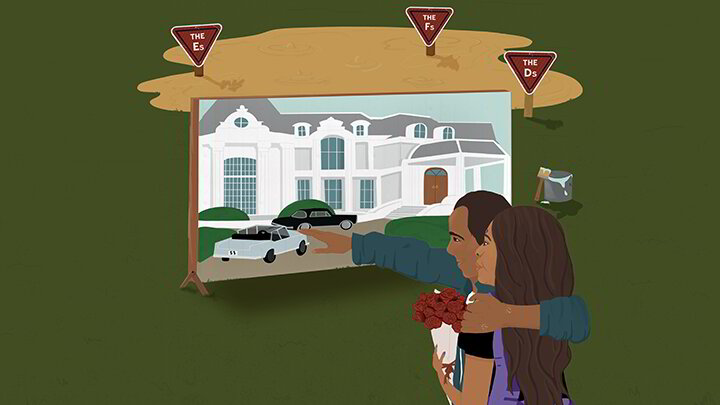
The Quicksand Model of Coercive Control, developed by (me) Kate Amber and utilized by End Coercive Control USA, is a survivor-centered, trauma-informed framework that explains the layered tactics and strategies coercive controllers use to entrap and dominate their targeted victims. This model categorizes coercive control tactics and strategies into the D's, E's, F's, and I's, offering a detailed understanding of how coercive control operates on psychological, biological, and social levels. It is a bio-psycho-social framework that takes a holistic and systems-based approach to explaining abuse, violence and oppression. By exploring these categories, we can better understand the mechanisms of coercive control and learn to dismantle the systems that enable coercive controllers and harm targeted victims.
The D's: The Weapons of Coercive Control: Double Standards, Double Binds, Double Speak, Double Down, Double Team, Double Cross, and DARVO
The "D's" in the Quicksand Model highlight the manipulative tactics and strategies abusers use to confuse, control, and dominate their targets.
Double Standards: Coercive controllers enforce one set of rules for themselves and another for their targets, creating an unfair and oppressive dynamic. For example, they may demand loyalty while being unfaithful themselves.
Double Binds: Targets are placed in no-win situations where any choice they make is wrong. This tactic creates confusion and helplessness, as the target feels they cannot succeed no matter what they do.
Double Speak: Coercive controllers use contradictory and deceptive language and communication to manipulate and gaslight their targeted victims. This tactic erodes trust in the target's own perceptions and reality.
Double Down: When confronted, coercive controllers intensify their controlling behavior rather than taking accountability. This escalation reinforces their dominance and silences the target of their abuse.
Double Team: Coercive controllers may enlist others to support their narrative or isolate the victim further, creating a sense of betrayal and amplifying the target's isolation.
Double Cross: Coercive controllers betray the trust of their targets, often by breaking promises or exploiting vulnerabilities. This tactic deepens the targeted victim's dependency and sense of betrayal.
DARVO (Deny, Attack, Reverse Victim and Offender): While The Doubles represent tactics of coercive control, DARVO is the coercive controller's most common strategy. DARVO is used by coercive controllers to Deny their actions, Attack the target for speaking out, and position themselves as the true victim (Reverse Victim & Offender). This strategy shifts blame and silences the targeted victim.
The D's illustrate how coercive controllers entrap targets in quicksand using manipulation, deception, and tactics and strategies of coercion and control, leaving targets feeling trapped and powerless.
The E's: The Goals of Coercive Control: Ensnare, Entrap, Exploit, Erode, Prevent Escape Through Escalation, Erase, and Eradicate
The "E's" focus on the ways coercive controllers systematically dismantle a target's autonomy and sense of self. The E's are the coercive controllers goals which keep targets entrapped in quicksand, or return them to the quicksand, if they manage to temporarily escape.
Ensnare: Coercive controllers lure targets into the quicksand with love bombing (manipulative kindness), mirroring, and future faking (which make up the mirage), only to entrap them in the quicksand of coercion and control that is hidden behind the mirage in the background (see image above).
Entrap: Targets are systematically entrapped in quicksand through isolation, financial control, legal manipulation, and various other psychological, biological and social tactics, making it difficult for them to leave.
Exploit: Coercive controllers take advantage of the target's normal human vulnerabilities, such as by violating or ignoring their emotional needs, forcing financial instability, or triggering their past trauma, to maintain control. Some coercive controllers intentionally choose strong, creative and highly capable targets, specifically to exploit the target's strengths, and feed off of them like a parasite.
Erode: Coercive controllers erode the target's sense of self, identity, and autonomy through constant criticism, gaslighting, and manipulation. Over time, targets may lose confidence in their ability to make decisions or live independently.
Prevent Escape Through Escalation: When targets attempt to leave or assert independence, coercive controllers escalate their tactics and strategies. They do so by increasing the frequency and/or severity of their threats, violence, deception, or manipulation, to prevent their target's escape from the quicksand.
Erase: Coercive controllers attempt to erase the target's individuality, autonomy, and connections to others, leaving them entirely dependent on the abuser. Even after the target leaves the coercive controller, they often feel erased through the coercive controller's and/or system professional's silencing and invalidation of their experience.
Eradicate: In extreme cases, coercive controllers seek to completely eradicate their target. These are the cases that end in homicide, suicide, or homicide/suicide.
The E's demonstrate how coercive control systematically dismantles a target's autonomy and identity, leaving them feeling trapped and hopeless.
The F's: The Methods of Coercive Control: Force, Fraud, and Fear
The "F's" highlight the core mechanisms coercive controllers use to establish and maintain control over their targeted victims.
Force: Coercive controllers use physical, emotional, and/or psychological force to dominate their victims. This can include physical violence, threats, or coercion. Force can be blatant or subtle, and it often manifests as harsh punishments for non-compliance with the coercive controller's demands.
Fraud: Coercive controllers deceive their targets through lies, manipulation, or false promises, creating a false sense of security or trust. Once the target discovers that their coercive controller has been hiding things and lying to them, it can cause intense feelings of betrayal, known as betrayal trauma.
Fear: Fear is a central tool of coercive control. Coercive controllers use credible threats, intimidation, and overt and implied consequences to keep targets compliant. Even one single act of physical violence can be enough to instill a deep feeling of fear in the target, leading to increased compliance, and autonomy erosion, over time.
The F's reveal the fundamental tools of coercive control, which rely on deception, intimidation, and violence to maintain dominance.
The I's: Coercive Control in The Law: Indignity, Isolation, Intimidation, Inequality, and Indoctrination
The "I's" focus on the ways abusers strip targeted victims of their dignity, independence, and agency. Indignity, isolation, intimidation and inequality are aspects covered by statutes against coercive control, and although indoctrination is not included in legal statutes, it is often a primary strategy utilized within a pattern of coercive control, especially within groups.
Indignity: Coercive controllers degrade and dehumanize their targets, stripping them of their dignity and self-worth. This can include verbal abuse, humiliation, or treating the target as inferior.
Isolation: Coercive controllers cut targets off from friends, family, and other support systems, leaving them unsupported and socially and emotionally dependent on the abuser.
Intimidation: Coercive controllers use threats, controlling body language, or tone of voice to instill fear and reinforce their dominance.
Inequality: At the heart of coercive control is a profound imbalance of power. Coercive controllers create a dynamic where they hold all authority, while the target is rendered powerless.
Indoctrination: Indoctrination is the overall strategy used by coercive controllers to systematically instill their beliefs, expectations, and rules into the target's mind through repetition and manipulation. This strategy creates a sense of inevitability and compliance, making it even harder for targets to free themselves from the quicksand.
The I's underscore how coercive control operates on multiple levels to dismantle the target's independence and reinforce systemic power imbalances.
Conclusion
The Quicksand Model of Coercive Control provides a powerful framework for understanding the tactics, strategies, and impacts of coercive control. By examining the D's, E's, F's, and I's we can better recognize the tactics and strategies of coercive controllers and take steps to protect ourselves and our loved ones from this insidious pattern of oppression and domination.
NOTE: Leaving a coercive controller can be very dangerous, so it's important to seek help before doing so. Numerous resources are available on ECCUSA's resource page to assist you.
Double Speak - Coercive Controller's Weaponization of Language: An Analysis of JD Vance's Tweet Using The Quicksand Model® of Coercive Control
In the complex landscape of political discourse, language often serves as a powerful tool for shaping perceptions and influencing public opinion. The recent tweet by J.D. Vance, U.S. Vice President, provides a compelling case study for examining the weaponization of language through the lens of The Quicksand Model® of Coercive Control. This blog post will analyze Vance's statement using the concept of Double Speak, a key component of The Quicksand Model®, to uncover the subtle yet potent coercively controlling tactics employed in political rhetoric.
The Tweet in Question
J.D. Vance, a rising figure in conservative politics, posted the following statement on X (formerly Twitter) on February 9, 2025:
At first glance, this tweet might appear to be a straightforward commentary on the separation of powers in the U.S. government. However, a closer examination through the lens of The Quicksand Model® reveals a more nuanced and potentially manipulative use of language.
Understanding The Quicksand Model® and Double Speak
Before delving into the analysis, it's crucial to understand The Quicksand Model® of Coercive Control and its concept of Double Speak. This model identifies several tactics used by coercive controllers to manipulate and dominate their targets, with Double Speak being a key component.
Double Speak involves the deliberate use of language to obscure, disguise, distort, or reverse the meaning of words. It's a powerful tool for creating confusion, dependency, and compliance in the target audience.
In the context of political discourse, Double Speak can be particularly effective in shaping public opinion and justifying certain actions or policies.
Analyzing Vance's Tweet Through the Lens of Double Speak
Let's break down Vance's tweet and examine how it employs various aspects of Double Speak:
1. Euphemistic and Ambiguous Language
Vance's use of the phrase "executive's legitimate power" is a prime example of euphemistic language. By framing executive actions as "legitimate," he subtly implies that any judicial intervention would be illegitimate, without explicitly stating so. This ambiguity allows for multiple interpretations while steering the audience towards a specific conclusion.
2. False Equivalence and Oversimplification
The tweet draws parallels between military operations, prosecutorial discretion, and broader executive powers. This comparison oversimplifies complex constitutional issues and creates a false equivalence between distinct areas of governance. Such oversimplification is a classic Double Speak tactic, designed to make complex issues seem straightforward and unambiguous.
By invoking scenarios of judges interfering with military operations or prosecutorial decisions, Vance taps into emotions of fear and indignation. This emotional manipulation is a key aspect of Double Speak, as it diverts attention from the nuanced reality of checks and balances in the U.S. government system.
4. Distortion of Constitutional Principles
While Vance's tweet appears to champion the separation of powers, it actually distorts this principle by suggesting an overly rigid division. In reality, the U.S. system of government involves complex interactions and checks between branches. This distortion is a form of Double Speak that presents a simplified, black-and-white view of a nuanced issue.
The tweet uses coded language that resonates with a specific political base. Terms like "executive's legitimate power" can be seen as a dog whistle to supporters of a strong executive branch, particularly in the context of recent political debates about executive authority.
6. Deception Through False Implication
J.D. Vance's recent tweet exemplifies the subtle art of lying through false implication, a deceptive technique where a technically true statement implies something false. In this case, Vance's tweet implies that recent executive orders by the Trump Administration constitute a legitimate use of presidential power, suggesting that judicial intervention is inappropriate. However, this implication is misleading, as it overlooks the constitutional separation of powers, particularly Congress's exclusive authority over federal funding as stipulated in the Appropriations Clause of the U.S. Constitution. Trump's executive orders, especially those related to federal funding, have faced significant legal challenges, including temporary restraining orders from federal judges, indicating that they may not be a legitimate exercise of executive authority.
This misleading narrative is particularly dangerous as it exploits the audience's tendency to fill in gaps with assumptions, requiring careful analysis to separate fact from implication. Recent executive orders, such as those targeting diversity, equity, and inclusion initiatives and imposing temporary pauses on federal fund disbursement, have sparked immediate legal challenges from advocacy groups and state attorneys general. These legal interventions underscore the ongoing tension between executive authority and legislative control over federal spending, a fundamental aspect of the U.S. government's system of checks and balances.
The Impact of Double Speak in Political Discourse
The use of Double Speak in political communication, as exemplified by Vance's tweet, has far-reaching implications. It can shape public perception, influence policy debates, and even impact the interpretation of constitutional principles. By employing these linguistic tactics, politicians can create a narrative that supports their agenda while appearing to engage in objective discourse.
Moreover, the consistent use of such language can lead to a distorted understanding of complex political and legal issues among the public. It can create an environment where nuanced debate is replaced by simplistic, emotionally charged rhetoric (aka loaded language), potentially undermining the very democratic processes it claims to protect.
Conclusion
J.D. Vance's tweet serves as a prime example of how Double Speak, a key concept in The Quicksand Model® of Coercive Control, can be weaponized in political discourse. By employing euphemistic language, false equivalences, emotional manipulation, deception through false implication, and distortion of principles, Vance's statement goes beyond a simple commentary on separation of powers. It becomes a tool for shaping public opinion and potentially justifying certain political actions.
As consumers of political information, it is crucial to recognize these linguistic tactics and approach such statements with critical thinking. Understanding the mechanics of Double Speak empowers us to see beyond the surface of political rhetoric and engage more meaningfully with the complex realities of governance and constitutional principles.
In an era where information is abundant but clarity is often scarce, the ability to decode Double Speak is not just an academic exercise—it's an essential skill for maintaining a healthy democracy. By recognizing and calling out these tactics common in coercive control, we can strive for a political discourse that is more transparent, honest, and truly representative of the complex issues facing our society.
NOTE: Leaving a coercive controller can be dangerous, so it's important to seek help before doing so. Numerous resources are available on ECCUSA's resource page to assist you.